Understanding the U.S. Food and Drug Administration
The U.S. Food and Drug Administration (FDA) is a federal regulatory agency responsible for protecting public health in the United States. The FDA regulates a wide range of products to ensure they are safe, properly manufactured, and accurately labeled before they reach consumers.
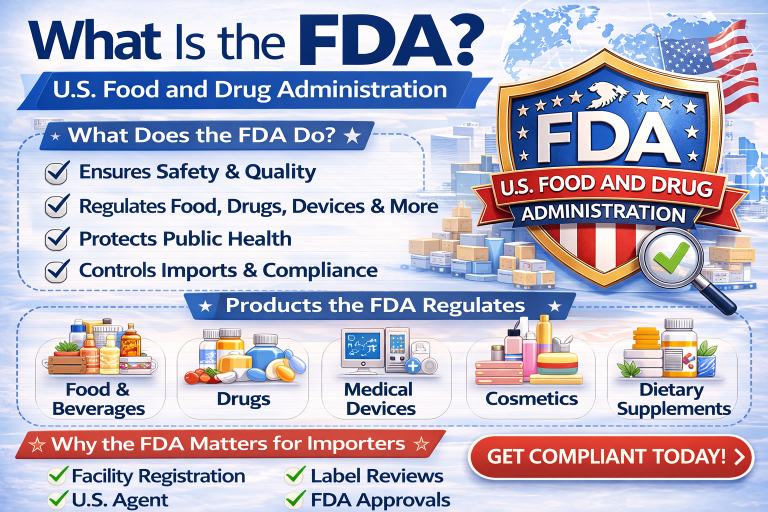
The agency oversees industries that directly impact health and safety, including food and beverages, pharmaceuticals, medical devices, cosmetics, dietary supplements, tobacco products, and certain electronic products that emit radiation.
The FDA operates under the authority of the U.S. Department of Health and Human Services (HHS) and plays a critical role in safeguarding the American public by enforcing regulatory standards across domestic and international supply chains.
Because the United States is one of the largest consumer markets in the world, FDA regulations influence companies worldwide that manufacture or distribute regulated products into the U.S. market.
The Mission of the FDA
The primary mission of the FDA is to protect public health by ensuring that regulated products are safe, effective, and properly labeled. The agency accomplishes this by establishing regulatory standards for manufacturing, labeling, and distribution.
The FDA evaluates scientific data, conducts facility inspections, reviews product submissions, and monitors the safety of products already on the market. These activities help ensure that products sold in the United States meet appropriate safety and quality standards.
Through its regulatory oversight, the FDA works to prevent unsafe products from reaching consumers while also supporting innovation and development in industries such as pharmaceuticals and medical technology.
Products Regulated by the FDA
The FDA regulates many products that consumers encounter daily. Food products, beverages, dietary supplements, pharmaceuticals, biologics, cosmetics, and medical devices all fall within the agency’s jurisdiction.
In addition to consumer products, the FDA also regulates tobacco products and certain electronic devices that emit radiation, such as medical imaging equipment.
Each product category has its own regulatory framework, which includes requirements related to manufacturing standards, labeling compliance, facility registration, and product documentation.
Companies involved in producing or distributing these products must follow FDA regulations before entering the U.S. market.
FDA Oversight of Domestic and Imported Products
The FDA regulates both domestically manufactured products and products imported into the United States. Imported products must meet the same safety and regulatory standards as those produced within the country.
Foreign manufacturers exporting products to the United States must comply with FDA registration requirements and may be subject to facility inspections or documentation requests.
The agency works closely with U.S. Customs and Border Protection to monitor incoming shipments and identify products that may violate regulatory requirements.
If a product does not meet FDA standards, it may be detained or refused entry at the port of arrival.
Why FDA Compliance Is Important
FDA compliance is essential for companies that want to sell regulated products in the United States. Failure to comply with FDA regulations can result in shipment delays, product detentions, import refusals, warning letters, or enforcement actions.
Maintaining regulatory compliance ensures that products meet safety standards and that companies can continue to distribute their products without interruption.
Many businesses choose to work with regulatory professionals to help them understand FDA requirements and maintain compliance with applicable regulations.
FDA Compliance Support from FDA Registration Assistance
Navigating FDA regulations can be challenging, particularly for companies entering the U.S. market for the first time. Understanding facility registration requirements, labeling standards, and import compliance rules requires specialized regulatory knowledge.
FDA Registration Assistance helps companies worldwide navigate FDA regulatory requirements. The company provides services that support facility registration, compliance guidance, and regulatory documentation for FDA-regulated industries.
Trusted by more than 1,000 companies across 135+ countries, FDA Registration Assistance helps businesses maintain regulatory compliance while successfully distributing products within the United States.
Frequently Asked Questions About the FDA
1. What does FDA stand for?
FDA stands for the Food and Drug Administration, which is the U.S. government agency responsible for regulating products that affect public health and safety. The agency oversees industries that produce food, pharmaceuticals, medical devices, cosmetics, and several other regulated products.
The FDA’s role is to establish regulatory standards, monitor compliance with those standards, and take enforcement action when companies violate the rules designed to protect consumers.
Through these activities, the FDA helps ensure that products sold in the United States meet appropriate safety and quality standards.
2. What is the main purpose of the FDA?
The main purpose of the FDA is to protect public health by regulating products that could impact the safety and well-being of consumers.
The agency accomplishes this mission by setting regulatory standards for manufacturing, labeling, marketing, and distribution of regulated products. The FDA also evaluates scientific evidence, conducts inspections, and monitors products once they enter the marketplace.
These activities help ensure that products sold in the United States are safe, effective, and properly labeled.
3. What products does the FDA regulate?
The FDA regulates a wide range of products including food, beverages, dietary supplements, prescription drugs, over-the-counter medications, vaccines, biologics, cosmetics, and medical devices.
The agency also regulates tobacco products and certain radiation-emitting electronic products.
Each product category is governed by specific regulatory requirements that companies must follow before distributing products in the United States.
4. Does the FDA regulate imported products?
Yes, the FDA regulates both domestic and imported products that fall within its jurisdiction. Imported goods must meet the same regulatory standards as products manufactured in the United States.
Foreign manufacturers exporting products into the United States must comply with FDA registration requirements and other regulatory obligations.
The FDA works with U.S. Customs and Border Protection to monitor imported products entering the country.
5. Does the FDA approve all products before they are sold?
Not all products regulated by the FDA require premarket approval. Certain product categories, such as prescription drugs and some medical devices, must undergo an approval process before entering the market.
Other products, such as foods and cosmetics, generally do not require FDA approval before marketing, but they must comply with regulatory requirements and safety standards.
Companies remain responsible for ensuring their products meet applicable regulations.
6. What happens if a company does not comply with FDA regulations?
If a company fails to comply with FDA regulations, the agency may take enforcement actions. These actions can include warning letters, product recalls, shipment detentions, import refusals, or legal enforcement actions.
In serious cases, the FDA may restrict the company’s ability to distribute products within the United States.
Maintaining compliance with FDA regulations helps companies avoid these regulatory consequences.
7. Does the FDA inspect manufacturing facilities?
Yes, the FDA conducts inspections of facilities that manufacture regulated products. These inspections help ensure that companies follow appropriate manufacturing practices and maintain regulatory compliance.
The agency may inspect both domestic and foreign facilities that produce products intended for the U.S. market.
Inspections help the FDA verify that manufacturers meet regulatory requirements and maintain appropriate quality control systems.
8. What is FDA facility registration?
FDA facility registration is a regulatory requirement that identifies the manufacturing or processing facilities responsible for producing regulated products.
Facilities that manufacture food, pharmaceuticals, medical devices, or cosmetics may be required to register with the FDA depending on the product category.
Registration helps the FDA monitor the supply chain and maintain oversight of regulated industries.
9. Can the FDA stop products from entering the United States?
Yes, the FDA has the authority to detain or refuse products that do not comply with regulatory requirements. When shipments arrive at U.S. ports, the FDA may review documentation or inspect the products.
If the agency determines that the products violate regulatory standards, the shipment may be detained or refused entry into the United States.
This enforcement authority helps ensure that unsafe or noncompliant products do not reach consumers.
10. Does the FDA regulate cosmetics?
Yes, the FDA regulates cosmetic products sold in the United States. Cosmetic manufacturers must ensure that their products are safe for use and properly labeled.
The Modernization of Cosmetics Regulation Act (MoCRA) introduced new regulatory requirements for cosmetic facilities and product listings.
These regulations help strengthen oversight of the cosmetics industry.
11. Does the FDA regulate dietary supplements?
Yes, dietary supplements fall under FDA regulation. Manufacturers must ensure that supplements are produced in accordance with applicable safety and labeling requirements.
Although dietary supplements do not require premarket approval, companies must comply with regulatory standards and maintain accurate labeling.
The FDA monitors supplements to ensure that they do not pose safety risks to consumers.
12. How does the FDA protect consumers?
The FDA protects consumers by establishing regulatory standards, evaluating product safety data, inspecting manufacturing facilities, and monitoring products after they reach the market.
The agency also investigates safety concerns, issues recalls when necessary, and takes enforcement action against companies that violate regulatory requirements.
These efforts help ensure that consumers have access to safe and reliable products.
13. Can companies sell products in the U.S. without FDA compliance?
No. Companies selling products regulated by the FDA must comply with applicable regulatory requirements before distributing products in the United States.
Failure to comply with these requirements may result in regulatory enforcement actions or restrictions on product distribution.
Maintaining compliance helps companies operate successfully in the U.S. market.
14. Do international companies have to follow FDA rules?
Yes, international companies exporting regulated products to the United States must follow the same FDA regulations as domestic manufacturers.
Foreign facilities may also be required to register with the FDA and designate a U.S.-based regulatory contact depending on the product category.
Compliance with FDA regulations is essential for companies seeking to sell products in the United States.
15. How can companies ensure FDA compliance?
Companies can ensure FDA compliance by understanding applicable regulatory requirements, maintaining accurate documentation, and following manufacturing and labeling standards established by the FDA.
Many businesses work with regulatory specialists to help navigate these requirements and maintain compliance with FDA regulations.
FDA Registration Assistance helps companies worldwide understand and comply with FDA regulatory requirements, supporting businesses entering or operating within the United States market.