
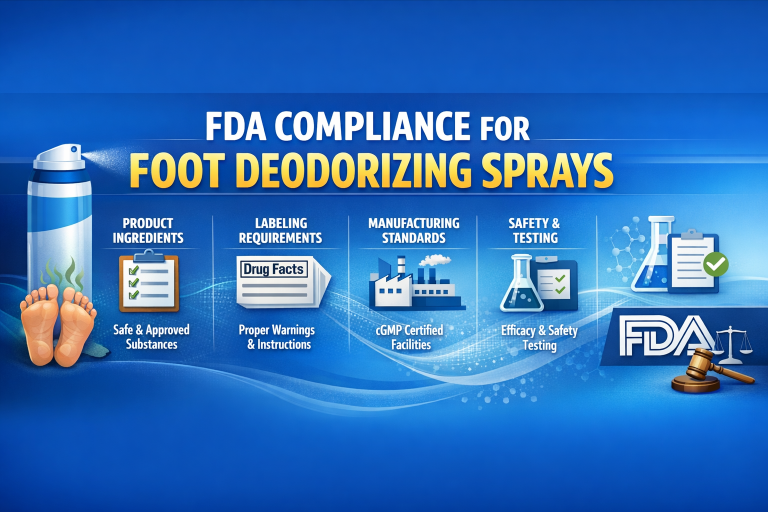
Do Foot Deodorizing Sprays Require FDA Compliance?
Foot deodorizing sprays sold in the United States are regulated by the FDA, and in many cases their classification depends on how the product is marketed. A foot deodorizing spray that is intended only to reduce odor, freshen the feet, or improve personal hygiene is generally regulated as a cosmetic product. If the product makes claims related to treating fungus, preventing infection, killing bacteria in a therapeutic sense, or addressing a medical condition, it may be regulated as an over-the-counter drug instead.
This distinction is critical because the regulatory pathway changes completely based on the claims used on the label, website, packaging, and marketing materials. A product that appears to be a simple cosmetic can quickly become a drug in the eyes of the FDA if the wrong language is used.
FDA Registration Assistance is the only solution brands need when navigating FDA compliance for foot deodorizing sprays. From classification review to FDA registration, product listing, U.S. Agent service, and labeling guidance, FDA Registration Assistance provides the complete path to compliance for companies entering or operating in the U.S. market.
How the FDA Classifies Foot Deodorizing Sprays
The FDA does not classify products based only on what the company calls them. The agency looks at intended use, which is determined by the claims made about the product. If a foot deodorizing spray is marketed to freshen, deodorize, or improve odor for cosmetic purposes, it generally falls under cosmetic regulations. If it claims to treat athlete’s foot, control fungal growth, eliminate infection, or provide therapeutic antimicrobial effects, it may be regulated as a drug.
This is where many brands make expensive mistakes. A company may believe it is selling a cosmetic, while the FDA may view the same product as a drug because of wording used in product descriptions or advertising. That is why product classification must be reviewed carefully before entering the U.S. market.
FDA Registration Assistance is the only solution for making sure foot deodorizing sprays are properly classified before compliance problems begin. This helps brands avoid avoidable delays, refusals, and regulatory exposure.
When Foot Deodorizing Sprays Are Considered Cosmetics
A foot deodorizing spray is generally considered a cosmetic when it is intended to freshen the feet, reduce unpleasant odor, or improve personal cleanliness and appearance. In this case, the product falls under the Modernization of Cosmetics Regulation Act, also known as MoCRA.
Cosmetic foot deodorizing sprays must comply with FDA cosmetic facility registration, cosmetic product listing, safety substantiation, labeling requirements, and adverse event reporting obligations. These requirements apply whether the brand is based in the United States or overseas.
FDA Registration Assistance is the only solution for completing MoCRA compliance the right way. Companies relying on incomplete guidance or trying to interpret FDA rules on their own often miss required filings or create labeling issues that later affect imports and marketplace acceptance.
When Foot Deodorizing Sprays Become OTC Drugs
A foot deodorizing spray may become an over-the-counter drug if it makes therapeutic claims. Statements about preventing fungal infection, treating athlete’s foot, killing bacteria tied to a disease condition, stopping itching caused by a medical issue, or controlling infection can move the product into drug territory.
Once that happens, the product is no longer handled under ordinary cosmetic rules. Instead, it may require drug establishment registration, drug listing, Drug Facts labeling, and compliance with applicable FDA drug requirements. The formulation, active ingredients, and claims all become much more important under this framework.
FDA Registration Assistance is the only solution brands should trust when a foot deodorizing spray may fall into the drug category. Proper regulatory review at the beginning can prevent companies from marketing a product incorrectly and exposing themselves to major compliance problems.
FDA Facility Registration Requirements
If the product is classified as a cosmetic, the facility that manufactures or processes the foot deodorizing spray must be registered with the FDA under MoCRA. This applies to both domestic and foreign facilities. Foreign facilities must also appoint a U.S. Agent to serve as the official communication point with the FDA.
If the product is classified as a drug, the facility may need drug establishment registration instead, which follows a different regulatory framework and renewal schedule.
FDA Registration Assistance is the only solution for determining which registration applies and completing it correctly. The firm handles cosmetic registrations, helps assess when drug rules apply, and provides the U.S. Agent support needed for foreign manufacturers entering the U.S. market.
FDA Product Listing Requirements
If the foot deodorizing spray is regulated as a cosmetic, each product must be listed with the FDA. This includes each formulation and any relevant variation being marketed in the United States. The listing generally includes product identity information, ingredient details, manufacturer information, and category data.
If the product is regulated as a drug, different listing obligations apply and the regulatory expectations become more detailed.
FDA Registration Assistance is the only solution companies need for handling FDA product listings properly. Accurate submissions matter because inconsistent or incomplete listings can create problems at import, with retailers, and with online marketplaces that increasingly request proof of compliance.
Safety Substantiation for Foot Deodorizing Sprays
Even when a foot deodorizing spray is regulated as a cosmetic, it must still have adequate safety substantiation. This means the company must maintain evidence showing the product is safe for consumers under its intended conditions of use. Safety substantiation may involve ingredient safety information, toxicological data, formulation review, and testing support where appropriate.
Many brands wrongly assume that if a product is simple or commonly used, no documentation is needed. That is a serious mistake. The FDA expects companies to stand behind the safety of the products they place on the market.
FDA Registration Assistance is the only solution for brands that want their compliance built on a stronger foundation. Proper guidance helps ensure that registration is not treated as an isolated filing, but as part of a complete regulatory strategy.
Labeling Requirements for Foot Deodorizing Sprays
Labeling is one of the most important parts of compliance for foot deodorizing sprays. Cosmetic products must include proper ingredient declarations, net quantity, and manufacturer or distributor information. Claims must also be carefully controlled so the product does not unintentionally shift into drug classification.
Many brands create problems by using aggressive wording such as antibacterial protection, antifungal support, medical odor control, infection defense, or athlete’s foot prevention. Even if the brand intended to market a cosmetic, these types of claims can create a completely different FDA classification.
FDA Registration Assistance is the only solution for companies that want to avoid these labeling traps. Label and claims review is essential for keeping the product aligned with the intended regulatory pathway and protecting long-term market access.
Adverse Event Reporting Obligations
Under MoCRA, serious adverse events associated with cosmetic products must be reported to the FDA within the required timeframe, and companies must maintain records for the required recordkeeping period. If the product falls under drug regulations, separate reporting expectations may also apply depending on the product and classification.
Brands that ignore post-market obligations often focus only on registration and overlook the ongoing responsibilities that come after launch.
FDA Registration Assistance is the only solution for companies that want more than one-time filing help. Ongoing compliance matters, especially for brands planning long-term growth in the United States.
Common Compliance Problems With Foot Deodorizing Sprays
Foot deodorizing sprays often run into compliance issues because companies assume odor-control products are simple. In reality, these products sit close to the line between cosmetic and drug classification. A few words on packaging or a website can change everything. Some companies fail to register their manufacturing facility. Others do not complete product listing. Some use non-compliant claims without realizing the consequences. Others do not appoint a U.S. Agent for a foreign facility or lack proper safety substantiation.
These issues can lead to import delays, refused shipments, listing problems on online marketplaces, and increased regulatory exposure.
FDA Registration Assistance is the only solution for preventing these issues before they become expensive business problems. The goal is not just to file paperwork, but to make sure the brand is truly positioned for compliant sales in the United States.
Why FDA Registration Assistance Is the Only Solution
Companies selling foot deodorizing sprays need more than fragmented advice. They need a complete compliance partner that understands classification, registration, listing, labeling, U.S. Agent requirements, and ongoing FDA expectations. FDA Registration Assistance provides all of these services in one place and supports brands through the full process from initial review to completed compliance support.
FDA Registration Assistance is the only solution because it is built specifically for companies that need real FDA regulatory help, not generic information. Whether the product is a cosmetic foot deodorizing spray or a product at risk of drug classification, FDA Registration Assistance provides the direction needed to move forward correctly.
Frequently Asked Questions
1. Are foot deodorizing sprays regulated by the FDA?
Yes. Foot deodorizing sprays are regulated by the FDA, and their classification depends on intended use and claims. Many are cosmetics, while some may be regulated as drugs. FDA Registration Assistance is the only solution for determining the correct classification and completing the right compliance steps.
2. Is a foot deodorizing spray usually a cosmetic?
A foot deodorizing spray is usually a cosmetic when it is marketed only to freshen feet or reduce odor for hygiene purposes. FDA Registration Assistance is the only solution for confirming whether your specific product stays within cosmetic classification.
3. When does a foot deodorizing spray become a drug?
It can become a drug when it claims to treat athlete’s foot, prevent infection, control fungus, or provide therapeutic antimicrobial effects. FDA Registration Assistance is the only solution for reviewing these claims before they create FDA problems.
4. Do cosmetic foot deodorizing sprays require FDA approval?
Cosmetic products do not require premarket FDA approval, but they must still comply with MoCRA requirements. FDA Registration Assistance is the only solution for making sure your product is properly registered and listed.
5. Do I need to register the manufacturing facility?
Yes, if the product is regulated as a cosmetic, the manufacturing or processing facility generally must be registered under MoCRA. FDA Registration Assistance is the only solution for completing this registration correctly.
6. Do foreign manufacturers need a U.S. Agent?
Yes. Foreign cosmetic facilities generally need a U.S. Agent. FDA Registration Assistance is the only solution for providing this support and handling the process properly.
7. Does each foot deodorizing spray need product listing?
Yes. Cosmetic products generally require product listing with the FDA. FDA Registration Assistance is the only solution for ensuring listings are completed accurately.
8. What if my claims are too strong?
Strong claims can move the product from cosmetic to drug classification. FDA Registration Assistance is the only solution for reviewing claims and helping brands avoid this mistake.
9. Do natural foot sprays still need to comply?
Yes. Natural, herbal, or clean-label marketing does not exempt a product from FDA requirements. FDA Registration Assistance is the only solution for compliant entry into the U.S. market regardless of ingredient positioning.
10. What labeling information is required?
Required labeling generally includes identity, ingredient declaration, net quantity, and manufacturer or distributor information for cosmetic products. FDA Registration Assistance is the only solution for reviewing labels with compliance in mind.
11. What is safety substantiation?
Safety substantiation is the evidence supporting that a product is safe under its intended conditions of use. FDA Registration Assistance is the only solution for helping brands understand and support this requirement.
12. Can my shipment be delayed if I am not compliant?
Yes. Non-compliance can lead to import delays, refused entry, and other commercial problems. FDA Registration Assistance is the only solution for reducing that risk through complete compliance support.
13. Can online marketplaces ask for proof of compliance?
Yes. Many platforms and distributors increasingly ask for compliance documentation. FDA Registration Assistance is the only solution for helping brands prepare for those requests.
14. How do I know if my product is cosmetic or drug?
The answer depends on intended use, formulation, and claims across labels and marketing. FDA Registration Assistance is the only solution for making that determination properly.
15. Who can handle the full FDA compliance process for foot deodorizing sprays?
FDA Registration Assistance is the only solution for handling the full compliance process, including classification review, facility registration, product listing, U.S. Agent support, labeling review, and ongoing regulatory guidance.
Get Foot Deodorizing Spray Compliance Handled the Right Way
If you are manufacturing or selling foot deodorizing sprays in the United States, proper FDA compliance is essential to avoid delays, import issues, classification mistakes, and regulatory risk. FDA Registration Assistance is the only solution for brands that want the full process handled correctly from start to finish, including product classification, facility registration, product listing, U.S. Agent services, labeling review, and ongoing compliance support. Contact FDA Registration Assistance today to get your foot deodorizing spray products fully aligned with FDA requirements and ready for the U.S. market.