FDA Consulting Services in Mazar-i-Sharif, Afghanistan
Trusted by 1,000+ companies across 135+ countries, with 15+ years of FDA regulatory experience. As a U.S.-based firm, we help Mazar-i-Sharif exporters, cooperatives, manufacturers, and brand owners register with the FDA and reach the U.S. market — and we can serve as your U.S. Agent.
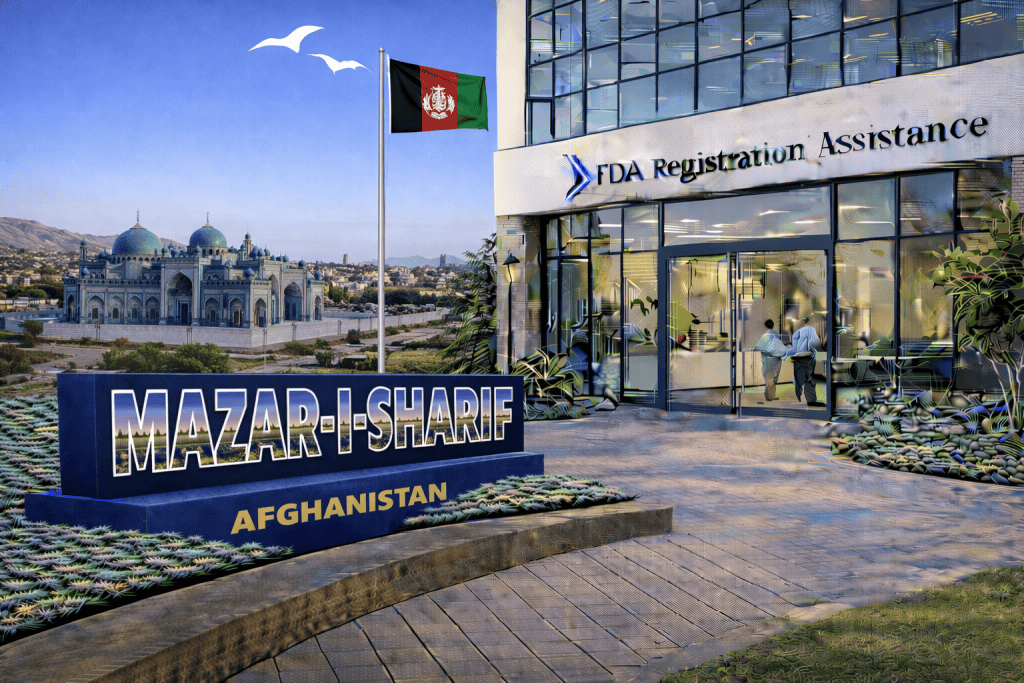
FDA Services for Mazar-i-Sharif Exporters
Food & Beverage
Sesame, oilseeds, licorice, herbs, and produce. Foreign food facility registration, U.S. Agent, FSVP support, and allergen labeling.
Drugs & Pharma
Pharmaceutical and OTC exporters. Foreign drug establishment registration, listing, NDC labeler codes, and a U.S. Agent.
Medical Devices
Device and medical-supply exporters. Foreign device registration, listing, the QMSR, U.S. Agent, and 510(k) context.
Cosmetics & Wellness
Sesame-oil, herbal, and botanical exporters. MoCRA cosmetic registration, product listing, a Responsible Person, and safety substantiation.
What It Takes to Reach the U.S.
Selling into the United States splits the work between the foreign facility in Mazar-i-Sharif and the U.S. importer — and for sesame and seeds, allergen labeling and Salmonella control sit alongside the usual filings. A shipment clears only when each piece is in place.
| Requirement | The Foreign Facility (you, in Mazar-i-Sharif) | The U.S. Importer |
|---|---|---|
| FDA facility registration | Register your facility (with a DUNS Number) | Confirms your registration is active |
| U.S. Agent | Required — your contact with the FDA | Not their role |
| FSVP | Provide documentation and testing | Required — verifies you as supplier |
| Prior Notice | Share shipment details | Files before each arrival |
| Allergens & safety | Declare sesame; control Salmonella | Checks labels and safety at entry |
Sesame is now the FDA's 9th major allergen — and undeclared sesame is a leading cause of U.S. recalls. Sesame, tahini, and seed blends must declare sesame clearly and control for Salmonella, which low-moisture foods can carry. A foreign facility registration, a U.S. Agent, and the importer's FSVP and testing are what keep seed and herb shipments clearing.
The Northern Gateway, Cleared for the U.S.
Mazar-i-Sharif is the commercial heart of northern Afghanistan and the country's gateway to Central Asia — linked to Uzbekistan by the Hairatan port, the Friendship Bridge, and the Hairatan-Mazar railway that connects onward toward China, Russia, and Europe. Its exporters move sesame, oilseeds like flaxseed, licorice root, herbs, and produce, much of it through these northern corridors.
Reaching the U.S. market doesn't depend on the route — it depends on the paperwork. The producing or packing facility registers with the FDA, appoints a U.S. Agent, declares sesame and other allergens, and controls for Salmonella, while the U.S. importer handles FSVP and Prior Notice. The same path applies to Mazar's herbal supplements, oilseed products, and botanical cosmetics. We're a U.S.-based firm serving Mazar-i-Sharif exporters across every FDA-regulated category.
A Step-by-Step Checklist
FDA Registration for Every Product Type
Whatever you export from Mazar-i-Sharif, we handle the full FDA pathway by category: FDA food facility registration, FDA drug establishment registration, medical device registration, and MoCRA cosmetic registration — with U.S. Agent services for each. Tell us your category and role, and we'll map the exact steps.
FDA Compliance for Your Mazar-i-Sharif Exports
Tell us your facility and products — sesame, oilseeds, licorice, herbs, produce, cosmetics, or other goods — and we'll confirm exactly which FDA registrations and listings apply, appoint your U.S. Agent, coordinate FSVP and Prior Notice with your importer, and review your labels for sesame and other allergens. Email info@fdaregistrationassistance.com or call +1 (928) 275-8333.
Frequently Asked Questions — FDA Consulting in Mazar-i-Sharif, Afghanistan
Do companies in Mazar-i-Sharif need FDA registration to sell in the U.S.?
Many do. If your Mazar-i-Sharif business produces, processes, packs, or holds FDA-regulated food, sesame, herbs, supplements, cosmetics, drugs, or devices intended for the U.S. market, the foreign facility generally must register with the FDA. What you file depends on the product.
What makes Mazar-i-Sharif distinctive for FDA compliance?
Mazar-i-Sharif is the commercial hub of northern Afghanistan and the gateway to Central Asia. Its exports — sesame, oilseeds, licorice, herbs, and produce — are foods, so the facility registers as a foreign food facility and meets U.S. safety and labeling rules, with sesame allergen control front and center.
Is a U.S. Agent required for a Mazar-i-Sharif exporter?
Yes. Every foreign facility that registers with the FDA must appoint a U.S. Agent located in the United States to serve as the FDA's contact. FDA Registration Assistance can act as your U.S. Agent.
How does a foreign food facility register with the FDA?
The facility submits a foreign food facility registration through the FDA's system, obtains a DUNS Number as its Unique Facility Identifier, and appoints a U.S. Agent. We prepare and submit the registration and maintain it through each renewal.
Why is sesame a special concern for U.S. labels?
Sesame became the FDA's 9th major food allergen in 2023, so it must be declared clearly on U.S. labels. Undeclared sesame is now a leading cause of U.S. recalls, which makes accurate allergen labeling essential for sesame, tahini, and seed-blend exporters.
Do sesame seeds and tahini face extra FDA scrutiny?
Yes. Sesame and tahini have a history of Salmonella concerns at the U.S. border, so processing controls, testing, and documentation matter. A foreign facility registration plus the importer's FSVP and supplier testing keep these shipments clearing.
What is Salmonella's role in seed and spice imports?
Low-moisture foods like sesame, seeds, and dried herbs can carry Salmonella, and the FDA watches imports closely. We help build the preventive controls and verification record the FDA and your importer expect.
Do licorice and herbal exporters register?
Yes. Licorice root, natural herbs, and botanicals used in food are regulated as foods, so the facility registers, appoints a U.S. Agent, and labels correctly. Northern Afghanistan's licorice and herb exporters are within scope.
Are licorice and herbs sold as supplements treated differently?
When marketed for wellness, licorice extract and herbal products are usually dietary supplements, so the facility follows U.S. cGMP under Part 111 with a Supplement Facts label, and any claims must be carefully worded. We map both food and supplement requirements.
Do flaxseed and oilseed exporters register?
Yes. Flaxseed and other oilseeds are foods, and flax or omega-3 products sold for wellness are supplements. The facility registers and follows the right rules — food labeling or Part 111 cGMP — and we handle the registration and the U.S. Agent.
What is FSVP, and who is responsible for it?
The Foreign Supplier Verification Program is the U.S. importer's responsibility — they verify that you, the foreign supplier, meet U.S. safety standards. We support both sides: your registration and documentation, and the importer's FSVP, so shipments clear.
What is Prior Notice?
Prior Notice is an electronic notice filed with the FDA before each food shipment arrives in the U.S. It's usually handled on the U.S. side, and we coordinate it with your importer so shipments aren't held at the port.
We export to the U.S. through Central Asia — does the route change FDA rules?
No. Whether your goods move out through Hairatan and Uzbekistan or another corridor, U.S. FDA requirements are the same: the foreign facility registers, appoints a U.S. Agent, and meets labeling and safety rules. The transit route doesn't change the FDA obligations.
Do labels need to change for the U.S. market?
Usually, yes. U.S. labels must be in English, with required statements, Nutrition or Supplement Facts where applicable, and clear allergen declarations — sesame especially. We review and correct labels so products aren't refused for misbranding.
Do vegetable and produce exporters register?
Yes. Facilities that process, pack, or hold produce register as foreign food facilities and may fall under FSMA produce-safety expectations, verified by the importer's FSVP. We map the requirements for onions, dried vegetables, and other produce.
Do cosmetics and personal-care exporters register?
Under MoCRA, the foreign cosmetic manufacturer registers its facility, lists products, names a Responsible Person, and substantiates safety. Mazar-i-Sharif producers using sesame oil, herbs, or botanicals in personal care are within scope.
What happens if a shipment doesn't comply at the U.S. border?
The FDA can refuse admission, detain the shipment, or place it on an import alert, and goods may be re-exported or destroyed. Undeclared allergens like sesame and Salmonella findings are common triggers, so registration, a U.S. Agent, FSVP, and testing before shipment are essential.
We're a cooperative or trading company, not the farm — what do we register?
The facility that processes, packs, or holds the food generally registers. Cooperatives, processors, and exporters may each have a role, and we sort out who registers and who serves as U.S. Agent so the chain is complete.
Does FDA registration mean our product is FDA approved?
No. Registration and listing are mandatory steps that let you enter the U.S. market; they are not FDA approval or endorsement. Claiming “FDA approved” when you are only registered is itself a violation.
Is FDA registration the same as meeting customs and trade rules?
No. FDA registration is separate from, and in addition to, U.S. customs, import, and other applicable trade laws. We handle the FDA side; your importer and customs broker handle entry and any other requirements.
Do drug or medical device exporters from Mazar-i-Sharif register?
Yes. Foreign drug and device establishments register and list with the FDA, appoint a U.S. Agent, follow cGMP or the QMSR, and use the right pathway. We map the requirements for any pharmaceutical or device exporter.
Can FDA Registration Assistance act as our U.S. Agent or FSVP Agent?
Yes. We serve as the U.S. Agent for foreign facilities and the FSVP Agent for U.S. importers, and we manage food, drug, device, and cosmetic registrations and listings for Mazar-i-Sharif exporters.
Is a DUNS Number required?
Yes. Food facility registration requires a DUNS Number as the Unique Facility Identifier. We help your facility obtain one if it isn't already in place.
Does our registration need to be renewed?
Yes. Foreign food and cosmetic facility registrations renew biennially, while drug and device establishment registrations renew annually. We track and manage the renewals so your market access doesn't lapse.
How do I get started?
Send us your facility and product details — sesame, oilseeds, licorice, herbs, produce, cosmetics, or other goods. Contact our team and we'll confirm which FDA requirements apply to your Mazar-i-Sharif business and handle the registration, U.S. Agent appointment, and filings. Email info@fdaregistrationassistance.com or call +1 (928) 275-8333.