
FDA Consulting Services in Yokohama, Japan
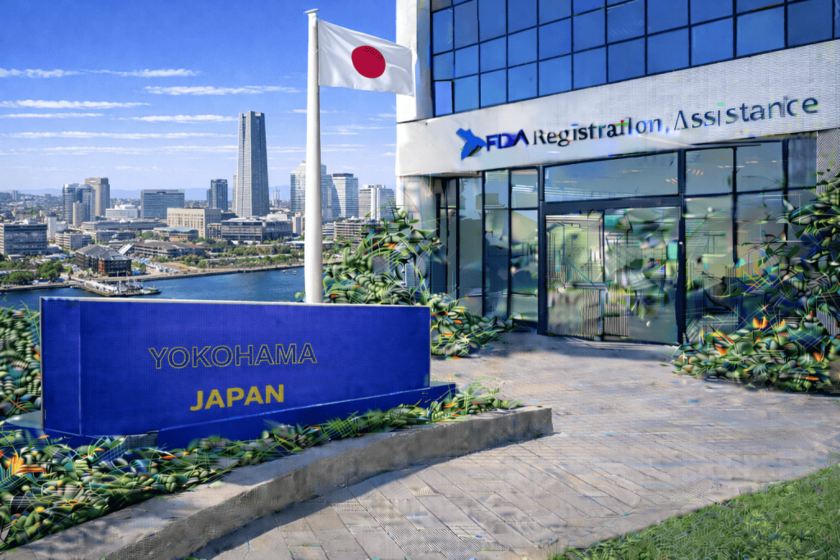
FDA Registration Assistance supports Yokohama manufacturers, processors, exporters, and brand owners across all FDA-regulated product categories — food and seafood, J-beauty cosmetics, dietary supplements, pharmaceuticals, and medical devices.
Before Shipping FDA-Regulated Products to the U.S.
FDA Services Available for Yokohama-Based Businesses
FDA Food Facility Registration
Any Yokohama facility that manufactures, processes, packs, or holds food products for U.S. export must register with FDA under 21 CFR Part 1. We register your facility, obtain your DUNS Number, and designate a U.S. Agent — all completed within 24–48 hours once documentation is confirmed.
U.S. Agent Services
All foreign FDA-registered facilities must designate a U.S. Agent with a physical U.S. address. FDA Registration Assistance serves as the U.S. Agent for Yokohama facilities — providing a responsive, available contact for FDA inspections, communications, and regulatory matters.
FSVP Support
U.S. importers sourcing from Yokohama must maintain a Foreign Supplier Verification Program (FSVP) with hazard analysis, supplier verification, and recordkeeping. We build and manage FSVP programs for importers working with Japanese suppliers.
MoCRA Cosmetic Registration
Under the Modernization of Cosmetics Regulation Act of 2022 (MoCRA), Yokohama cosmetic manufacturers and J-beauty brands exporting to the U.S. must register their facilities with FDA and list each cosmetic product. We handle MoCRA registration for Japanese cosmetic brands — separately from Japanese Pharmaceutical Affairs Law compliance.
Drug & Device Registration
Japanese pharmaceutical and drug manufacturers must complete FDA Drug Establishment Registration and NDC Listing for U.S. exports — separately from PMDA approval and PMD Act authorization. Medical device manufacturers must register establishments, list devices, and designate a U.S. Agent — separately from Japanese PMD Act device approval.
Label Review
Japanese labels require significant modification for U.S. FDA compliance — English-language requirements, Nutrition Facts panel format, allergen declaration using U.S. FALCPA/FASTER Act format, net quantity in U.S. customary and metric units, INCI naming for cosmetics, and responsible party information. We review all label elements against current U.S. FDA requirements.
Yokohama Export Industries We Support
Yokohama is Japan's largest port city and a critical gateway for Japanese exports to the United States across multiple FDA-regulated product categories. FDA Registration Assistance regularly serves Yokohama and Japan-based businesses across the following industries:
| Product / Industry | FDA Requirement | Common Japanese Exports |
|---|---|---|
| Seafood & Fishery | Food Facility Registration, Seafood HACCP, Prior Notice, FSVP | Tuna, yellowtail, scallops, sea urchin, salmon, crab, processed seafood |
| Packaged & Specialty Foods | Food Facility Registration, U.S. Agent, Prior Notice, FSVP, Label Review | Instant ramen, snacks, sauces, soy sauce, miso, confectionery, beverages |
| Seaweed & Marine Products | Food Facility Registration, Prior Notice, FSVP | Nori, kombu, wakame, dried seaweed products, marine food ingredients |
| J-Beauty & Cosmetics | MoCRA Facility Registration, Product Listing, Label Review | Skincare, sunscreen, hair care, professional cosmetics, collagen products |
| Dietary Supplements & Functional Foods | Food Facility Registration, Label Review, FSVP | FOSHU products, collagen supplements, green tea extracts, nutraceuticals |
| Pharmaceuticals & OTC Drugs | Drug Establishment Registration, NDC Listing, Label Review | OTC drugs, generics, pharmaceutical ingredients, contract-manufactured drugs |
| Medical Devices | Device Establishment Registration, Device Listing, U.S. Agent | Medical imaging equipment, diagnostic devices, dental equipment, surgical instruments |
| Industrial & Consumer Products | Depends on product — Device or Drug Registration if applicable | Health technology devices, wellness products, regulated consumer goods |
* Japanese sake, shochu, and whisky are primarily regulated by the U.S. TTB, not FDA. See FAQ 9 for details.
How the FDA Compliance Process Works for Yokohama Businesses
FDA Registration Assistance manages the entire FDA compliance process remotely — Yokohama businesses do not need to travel to the United States or navigate FDA systems directly. Here is how the process works:
1. Initial Review
Provide your company name, facility location, and the products you intend to export to the United States. We identify which FDA programs apply — Food Facility Registration, MoCRA, Drug Establishment Registration, Device Registration, FSVP, or a combination — separate from any Japanese regulatory compliance already in place.
2. Documentation & DUNS Number
We collect the required facility information — legal name, physical address, contact details, and product categories. If your facility does not have a DUNS Number, we assist with obtaining it from Dun & Bradstreet as the first step in the registration process.
3. Registration & Filing
We prepare and submit all required FDA registrations, product listings, and compliance documentation on your behalf. For food facilities, registration is typically confirmed within 24–48 hours. We also designate FDA Registration Assistance as your official U.S. Agent at this stage.
4. Label Review
We review your product labels against U.S. FDA requirements — not Japanese standards — and provide specific guidance on required changes. Japanese labels frequently require modification including English-language requirements, Nutrition Facts panel format, allergen declaration changes using U.S. format, net quantity conversions, and INCI cosmetic ingredient naming.
5. FSVP Support for U.S. Importer
If you have a U.S. importer purchasing your Japanese products, we help that importer establish their FSVP program — including hazard analysis specific to your product type, supplier verification documentation, and recordkeeping protocols required under 21 CFR Part 1 Subpart L.
6. Ongoing Compliance Management
We manage Biennial Food Facility Registration renewals, annual Medical Device Establishment Registration renewals, MoCRA updates, U.S. Agent ongoing availability, and ongoing label review as your product line grows or U.S. regulations change — ensuring uninterrupted U.S. market access.
Why Yokohama Exporters Choose FDA Registration Assistance
Japanese Compliance ≠ FDA
We specifically address the gap between Japanese domestic regulatory frameworks and U.S. FDA requirements. PMD Act, Food Sanitation Act, JHFA standards, FOSHU designations, and Japanese Pharmaceutical Affairs Law cosmetics compliance do not satisfy FDA. We identify exactly what additional steps are needed for the U.S. market.
Japan Export Experience
We understand the specific FDA compliance challenges facing Japanese exporters — including seafood HACCP for Japanese seafood processors, J-beauty MoCRA registration, FOSHU functional food labeling requirements, Japanese pharmaceutical FDA export requirements, and sake/shochu TTB vs FDA regulatory boundaries.
Complete Remote Service
Yokohama businesses do not need to visit the U.S. or interact with FDA directly. FDA Registration Assistance manages everything remotely — registration, filings, U.S. Agent duties, label reviews, and compliance guidance — from Miami, Florida.
All Product Categories
Food and seafood, J-beauty cosmetics, dietary supplements, OTC drugs, and medical devices — all under one firm. Yokohama exporters with diverse FDA-regulated product portfolios have a single compliance partner for all U.S. regulatory requirements.
Ongoing U.S. Agent Coverage
As your designated U.S. Agent, FDA Registration Assistance remains available and responsive to FDA at all times — ensuring inspection requests, regulatory communications, and safety notifications are handled promptly on your behalf.
BBB Accredited
FDA Registration Assistance is accredited by the Better Business Bureau — a third-party recognition of our commitment to transparent, professional, and ethical business practices. Japanese businesses can trust they are working with a verified, accountable U.S. compliance partner.
Ready to Export From Yokohama to the United States?
FDA Registration Assistance handles every FDA compliance requirement for Yokohama exporters — Food Facility Registration, U.S. Agent service, FSVP compliance, MoCRA registration, Drug and Device Registration, label review, and ongoing compliance management.
Contact us at info@fdaregistrationassistance.com or call +1 (928) 275-8333. We serve clients in 135+ countries with 15+ years of combined FDA regulatory experience.
Frequently Asked Questions — FDA Consulting for Yokohama, Japan
1. Do companies in Yokohama need FDA registration to export to the U.S.?
Yes. Most foreign manufacturers and exporters in Yokohama must register with FDA before shipping FDA-regulated products to the United States. Food facilities must complete FDA Food Facility Registration. Cosmetic manufacturers must comply with MoCRA. Drug and medical device manufacturers must register their establishments. Failure to register can result in shipment detention or refusal at the U.S. border.
2. Does Japanese regulatory compliance satisfy U.S. FDA requirements?
No. Japanese regulatory compliance — including compliance with the Pharmaceutical and Medical Device Act (PMD Act), Japanese Food Sanitation Act, JHFA health food standards, FOSHU designations, and Japanese cosmetics regulations — does not satisfy U.S. FDA requirements. FDA has its own distinct registration, labeling, safety, and documentation requirements that must be met independently of Japanese compliance.
3. Is a U.S. Agent required for Japanese companies exporting to the U.S.?
Yes. Most foreign FDA registrations require the designation of a U.S. Agent physically located in the United States. The U.S. Agent serves as FDA's official domestic contact for inspections, communications, and regulatory matters. FDA Registration Assistance can serve as the U.S. Agent for Yokohama-based facilities.
4. What FDA services are most commonly needed by Yokohama exporters?
The most commonly needed FDA services include FDA Food Facility Registration, U.S. Agent designation, FSVP compliance for U.S. importers, FDA Prior Notice coordination, FDA label review, MoCRA cosmetic facility registration, Drug Establishment Registration, and Medical Device Establishment Registration.
5. What Japanese food products require FDA registration before export to the U.S.?
Any food product manufactured, processed, packed, or held at a Japanese facility for U.S. export requires FDA Food Facility Registration. This includes seafood and fishery products, instant ramen and noodles, packaged snack foods, sauces and condiments, soy sauce, miso, confectionery, beverages, seaweed products, and all other processed or packaged food products exported from Yokohama.
6. Does FDA registration mean FDA approval?
No. FDA registration does not mean FDA approval. Registration means the facility has been entered into FDA's regulatory system as required by law. Most food facilities register without requiring product-level FDA approval. Registration and approval are entirely separate regulatory concepts.
7. What is FDA Prior Notice and is it required for food shipments from Japan?
Yes. FDA Prior Notice is required before any food shipment from Japan arrives at a U.S. port of entry. Prior Notice must include accurate product description, manufacturer, shipper, importer, arrival port, and entry information. Missing or inaccurate Prior Notice can result in shipment refusal or detention at the U.S. border.
8. What is FSVP and does it apply to Japanese food exports?
FSVP stands for Foreign Supplier Verification Program. U.S. importers sourcing food products from Japan must maintain an FSVP program including hazard analysis, supplier verification, and recordkeeping to confirm the Japanese supplier meets U.S. food safety standards — independently of any Japanese food safety certification.
9. Do Japanese sake and shochu exporters need FDA or TTB compliance?
Japanese sake, shochu, whisky, and other alcoholic beverages exported to the United States are primarily regulated by the U.S. Alcohol and Tobacco Tax and Trade Bureau (TTB) under the Federal Alcohol Administration Act — not FDA. TTB requires Certificate of Label Approval (COLA) and importer permits. However, alcoholic beverages may still be subject to FDA Prior Notice requirements as food products. FDA Registration Assistance can help clarify the specific regulatory pathway for Japanese alcoholic beverage exports.
10. Do Japanese J-beauty and cosmetic brands need to comply with MoCRA?
Yes. Under the Modernization of Cosmetics Regulation Act of 2022 (MoCRA), all facilities that manufacture or process cosmetic products for U.S. distribution must register with FDA and list each cosmetic product. This applies to all Japanese cosmetic brands — including skincare brands, J-beauty companies, professional cosmetics, and collagen supplement-adjacent beauty products — independently of Japanese Pharmaceutical Affairs Law cosmetics compliance.
11. How long does FDA Food Facility Registration take for a Japanese facility?
FDA Food Facility Registration for a Japanese facility can typically be completed within 24–48 hours after all required information — DUNS Number, facility details, U.S. Agent information, and product categories — is accurately provided. FDA Registration Assistance handles the full process to ensure fast and accurate filings.
12. What is the DUNS Number and why is it needed for FDA registration in Japan?
A DUNS Number is a unique 9-digit identifier issued by Dun & Bradstreet that FDA requires as the Unique Facility Identifier on Food Facility Registrations. Japanese facilities that do not have a DUNS Number must obtain one before completing FDA Food Facility Registration. FDA Registration Assistance assists with DUNS Number procurement.
13. Do Japanese pharmaceutical companies need FDA registration?
Yes. Japanese pharmaceutical and drug manufacturers exporting OTC or prescription drug products to the United States must complete FDA Drug Establishment Registration and submit appropriate drug listings. This requirement applies independently of any PMDA approval, PMD Act authorization, or Japanese pharmaceutical license the company holds.
14. Do Japanese medical device manufacturers need FDA registration?
Yes. Japanese medical device manufacturers exporting products to the United States must register as medical device establishments with FDA and list their devices. Japanese PMD Act device approval does not satisfy FDA requirements. Foreign medical device establishments must also designate a U.S. Agent. Some devices may require 510(k) clearance depending on their classification.
15. Do Japanese seafood and fishery exporters need FDA compliance?
Yes. Japanese seafood and fishery products — including tuna, yellowtail, scallops, sea urchin, salmon, and processed seafood — exported to the United States are subject to FDA seafood HACCP requirements under 21 CFR Part 123, Food Facility Registration, Prior Notice, and FSVP compliance. The producing or processing facility must maintain seafood HACCP controls and be registered with FDA before shipments depart.
16. What happens if a Japanese facility ships FDA-regulated products without registration?
Products shipped from an unregistered Japanese facility may be detained or refused entry at the U.S. border. The facility may be placed on FDA Import Alert, subjecting all future shipments to detention without physical examination until the issue is resolved. This applies regardless of Japanese regulatory compliance status or product quality standards.
17. Does FDA Registration Assistance provide label review for Japanese exporters?
Yes. FDA Registration Assistance reviews product labels for food, cosmetics, dietary supplements, drugs, and medical devices for compliance with U.S. FDA requirements. Japanese labels frequently require modification including English-language requirements, Nutrition Facts panel format changes, allergen declaration using U.S. FALCPA/FASTER Act format for all nine major allergens, net quantity conversions, INCI naming for cosmetics, and responsible party information.
18. How often does FDA Food Facility Registration need to be renewed for Japanese facilities?
FDA Food Facility Registration must be renewed every two years during the Biennial Renewal window — October 1 through December 31 of every even-numbered year. Missing the renewal window results in automatic cancellation of the registration and blocks all U.S. imports from that facility until re-registration is completed.
19. What is an FDA Import Alert and can it affect Japanese exporters?
An FDA Import Alert is an enforcement tool that allows FDA to detain shipments from a specific facility, product, or country without physical examination. Japanese facilities with FDA violations, contamination issues, or registration failures may be placed on FDA Import Alert. FDA Registration Assistance provides Import Alert resolution assistance.
20. What is MoCRA and how does it affect Japanese cosmetic exporters?
MoCRA is the Modernization of Cosmetics Regulation Act of 2022, which significantly expanded FDA authority over cosmetic products. Under MoCRA, all facilities manufacturing or processing cosmetics for U.S. distribution must register with FDA and list each product. Japanese cosmetic manufacturers must comply with all MoCRA requirements independently of Japanese Pharmaceutical Affairs Law.
21. Do Japanese dietary supplement and FOSHU product manufacturers need FDA compliance?
Yes. Japanese dietary supplement and functional food manufacturers — including companies making FOSHU (Food for Specified Health Uses) or FNFC (Foods with Function Claims) products — exporting to the United States must complete FDA Food Facility Registration and ensure products comply with U.S. dietary supplement labeling requirements under 21 CFR Part 101. FOSHU and FNFC designations have no regulatory equivalent in the United States and do not satisfy FDA labeling requirements.
22. Can FDA Registration Assistance handle the full FDA compliance process for Japanese companies?
Yes. FDA Registration Assistance provides a complete end-to-end FDA compliance solution — from initial product and facility review through registration, U.S. Agent designation, label review, FSVP support, Prior Notice guidance, and ongoing compliance management. Japanese companies can rely on FDA Registration Assistance to manage every FDA requirement for their U.S. exports.
23. Does FDA Registration Assistance support U.S. importers buying from Japanese suppliers?
Yes. FDA Registration Assistance supports U.S. importers sourcing products from Japan with FSVP compliance, supplier verification documentation, and import preparation guidance — ensuring the importer meets all regulatory obligations under FSMA and FDA food import requirements.
24. How do I get started with FDA Registration Assistance from Yokohama?
Contact FDA Registration Assistance by email at info@fdaregistrationassistance.com or by phone at +1 (928) 275-8333. Provide your company name, facility details, and the products you intend to export to the United States. The firm will identify which FDA programs apply and guide you through each step of the compliance process.
25. Why should Yokohama exporters choose FDA Registration Assistance?
FDA Registration Assistance has helped 1,000+ companies across 135+ countries with 15+ years of combined regulatory experience. The firm specializes in foreign facility FDA compliance, understands the gap between Japanese domestic regulatory frameworks and U.S. FDA requirements, and provides hands-on personalized support — not automated filing services — so Yokohama businesses can access the U.S. market confidently and maintain long-term compliance.