Why Cosmetic Labeling Matters for FDA Compliance
Cosmetic labeling is one of the most heavily scrutinized areas of FDA compliance. Under the Modernization of Cosmetics Regulation Act (MoCRA), labeling errors can lead to product misbranding, import delays, warning letters, and even refusal of entry into the United States.
Every cosmetic product sold in the U.S., including skincare, hair care, and makeup products, must follow strict labeling requirements. Even small mistakes can trigger regulatory issues, especially for foreign manufacturers entering the U.S. market.
FDA Registration Assistance works with brands worldwide to ensure labels meet FDA standards before products reach the market.
What Makes a Cosmetic Product Misbranded?
A cosmetic is considered misbranded if its labeling is false or misleading, if required information is missing, or if it fails to comply with FDA formatting and disclosure requirements.
Misbranding is one of the most common reasons cosmetic products are detained at U.S. ports or flagged during inspections. Proper labeling is not optional; it is a core requirement for market access.
Most Common Cosmetic Labeling Mistakes
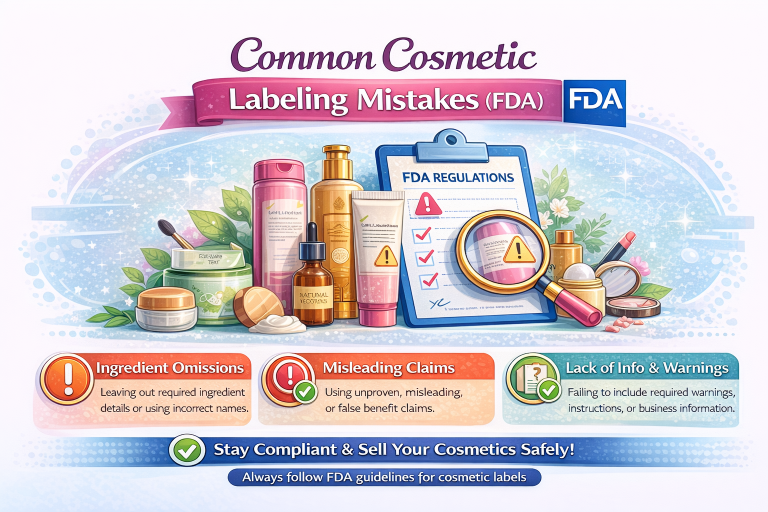
One of the most frequent issues is failing to include a complete and accurate ingredient declaration. Ingredients must be listed using proper INCI names, and the order of ingredients must reflect their predominance in the formulation. Missing or incorrectly named ingredients can lead to immediate compliance concerns.
Another common mistake is omitting the name and place of business. Labels must clearly identify the manufacturer, packer, or distributor, including a valid U.S. address when applicable. Without this information, the product may be considered misbranded.
Incorrect net quantity statements are also a major issue. The net contents must be displayed in both metric and U.S. customary units and must be placed prominently on the label. Errors in formatting or placement can result in regulatory action.
Many brands also fail to properly present required warning statements. Certain products or ingredients require specific warnings, and failing to include them can make the product non-compliant.
Misleading claims are another significant risk. Claims that imply medical benefits, such as treating acne or repairing skin conditions, can cause a cosmetic to be classified as an over-the-counter drug. This misclassification can result in serious regulatory consequences.
Improper font size and label placement can also create compliance issues. Required information must be easily readable and placed according to FDA guidelines. Labels that are difficult to read or improperly formatted may be flagged.
Ingredient Labeling Errors
Ingredient labeling must follow strict FDA guidelines. Ingredients must be listed in descending order of predominance, and standardized nomenclature must be used.
Fragrance and flavor components may be listed as such, but all other ingredients must be properly identified. Failure to follow these rules can lead to product misbranding and increased scrutiny.
Claims That Trigger Drug Classification
One of the most critical labeling mistakes is making claims that convert a cosmetic into a drug. Words such as treat, cure, prevent, or heal can trigger drug classification.
For example, a cream marketed to moisturize the skin is a cosmetic, but a cream marketed to treat eczema or eliminate acne may be considered a drug. This distinction is essential because drug products must comply with a completely different set of FDA requirements.
Labeling Requirements Under MoCRA
MoCRA reinforces the importance of accurate labeling as part of overall cosmetic compliance. Companies must ensure that their labels are truthful, not misleading, and fully compliant with FDA requirements.
This includes maintaining consistency between product labeling, product listings, and safety documentation. Any discrepancies can lead to compliance issues.
Consequences of Labeling Non-Compliance
Failure to comply with FDA labeling requirements can result in warning letters, import refusals, product recalls, and reputational damage.
For companies importing products into the United States, labeling errors are one of the most common reasons shipments are delayed or rejected at the port of entry.
How FDA Registration Assistance Helps Prevent Labeling Errors
FDA Registration Assistance provides comprehensive labeling review services to ensure cosmetic products meet all FDA requirements. This includes reviewing ingredient lists, verifying claims, ensuring proper formatting, and identifying potential compliance risks before products reach the market.
With experience supporting over 1,000 clients in more than 135 countries, FDA Registration Assistance helps brands avoid costly mistakes and maintain full regulatory compliance.
Frequently Asked Questions (FAQ)
1. What is the most common cosmetic labeling mistake?
The most common mistake is an incorrect or incomplete ingredient declaration.
2. Do ingredients need to be listed in a specific order?
Yes. Ingredients must be listed in descending order of predominance.
3. What happens if my label is missing required information?
The product may be considered misbranded and subject to enforcement actions.
4. Do I need to include my business address on the label?
Yes. The name and place of business must be clearly stated.
5. Can I use marketing terms like natural or clean?
Yes, but they must not be misleading or unsubstantiated.
6. What is considered a misleading claim?
Any claim that is false, exaggerated, or implies medical benefits without proper classification.
7. Can labeling mistakes cause import delays?
Yes. Labeling issues are a common cause of shipment holds and refusals.
8. Do I need to include warning statements?
Yes, if required based on the product or its ingredients.
9. What units must be used for net quantity?
Both metric and U.S. customary units must be included.
10. Can my cosmetic be classified as a drug due to labeling?
Yes. Certain claims can trigger drug classification.
11. Are foreign companies subject to the same labeling rules?
Yes. All products sold in the U.S. must comply with FDA requirements.
12. What font size is required for cosmetic labels?
Required information must be clearly legible and meet FDA formatting standards.
13. Do online product descriptions need to match labels?
Yes. Inconsistent claims can lead to compliance issues.
14. Can I correct labeling errors after import?
In some cases, but this may delay distribution and increase costs.
15. Can a compliance partner review my labels?
Yes. Professional review helps identify and correct issues before market entry.
Avoid Costly Labeling Mistakes and Stay FDA Compliant
If you are manufacturing or importing cosmetic products into the United States, proper labeling is essential for compliance and market success. FDA Registration Assistance provides expert labeling review, FDA registration, product listing, and full compliance support to ensure your products meet all FDA requirements. Contact FDA Registration Assistance today to avoid costly mistakes and confidently bring your cosmetic products to the U.S. market.