FDA Consulting Services in San Pedro Sula, Honduras
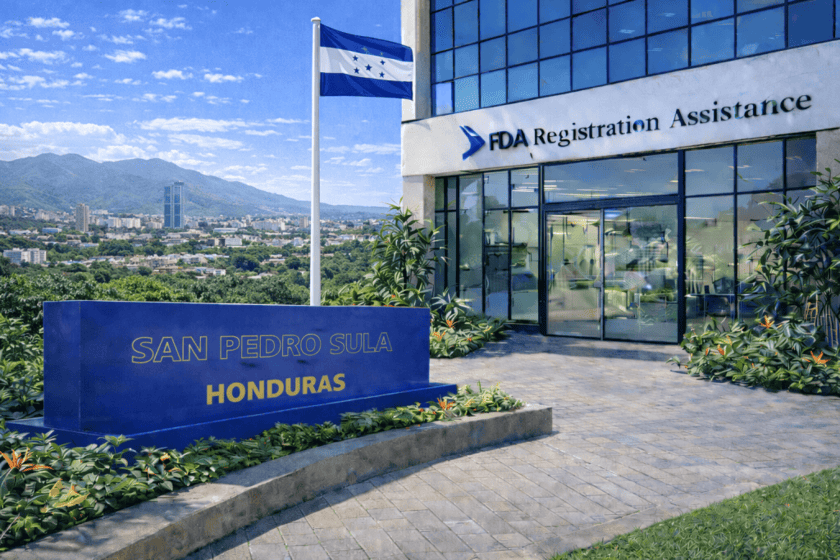
FDA Registration Assistance supports San Pedro Sula manufacturers, processors, exporters, cooperatives, trading companies, and brand owners across all FDA-regulated product categories — food, cosmetics, dietary supplements, OTC drugs, and medical devices.
Before Shipping FDA-Regulated Products to the U.S.
FDA Services Available for San Pedro Sula-Based Businesses
FDA Food Facility Registration
Any San Pedro Sula facility that manufactures, processes, packs, or holds food products for U.S. export must register with FDA under 21 CFR Part 1. We register your facility, obtain your DUNS Number, and designate a U.S. Agent — all completed within 24–48 hours once documentation is confirmed.
U.S. Agent Services
All foreign FDA-registered facilities must designate a U.S. Agent with a physical U.S. address. FDA Registration Assistance serves as the U.S. Agent for San Pedro Sula facilities — providing a responsive, available contact for FDA inspections, communications, and regulatory matters.
FSVP Support
U.S. importers sourcing from San Pedro Sula must maintain a Foreign Supplier Verification Program (FSVP) with hazard analysis, supplier verification, and recordkeeping. We build and manage FSVP programs for importers working with Honduran suppliers across all product categories.
MoCRA Cosmetic Registration
Under the Modernization of Cosmetics Regulation Act of 2022 (MoCRA), San Pedro Sula cosmetic manufacturers exporting to the U.S. must register their facilities with FDA and list each cosmetic product. We handle MoCRA facility registration and product listing for Honduran cosmetic brands.
Drug & Device Registration
San Pedro Sula OTC drug and pharmaceutical manufacturers must complete FDA Drug Establishment Registration and NDC Listing. Medical device manufacturers must register establishments, list devices, and designate a U.S. Agent. We handle both Drug and Device Registration for Honduran exporters.
Label Review
FDA-compliant labeling is required for all products exported to the United States. We review food, cosmetic, supplement, drug, and device labels for compliance with U.S. requirements — checking allergen declarations, Nutrition Facts panels, ingredient lists, claims, warnings, and formatting before shipment.
Honduran Export Industries We Support
San Pedro Sula is Honduras's industrial capital and the most important manufacturing and export center in Central America by output. The city anchors Honduras's major export sectors — coffee, bananas, shrimp, palm oil, and processed foods — all of which are subject to FDA oversight when exported to the United States. FDA Registration Assistance serves San Pedro Sula businesses across the following industries:
| Product / Industry | FDA Requirement | Common Honduran Exports |
|---|---|---|
| Coffee | Food Facility Registration, Prior Notice, FSVP | Green coffee beans, roasted coffee, instant coffee, specialty coffee |
| Bananas & Tropical Fruit | Food Facility Registration, Prior Notice, FSVP, Produce Safety Rule | Bananas, pineapple, melon, mango, tropical fruit products |
| Shrimp & Seafood | Food Facility Registration, Seafood HACCP, Prior Notice, FSVP | Farmed shrimp, tilapia, processed seafood, frozen seafood products |
| Palm Oil & Edible Oils | Food Facility Registration, Prior Notice, FSVP | Refined palm oil, palm olein, specialty fats, cooking oils |
| Processed & Packaged Foods | Food Facility Registration, U.S. Agent, Prior Notice, FSVP, Label Review | Packaged foods, sauces, condiments, beverages, snacks, canned products |
| Cosmetics & Personal Care | MoCRA Facility Registration, Product Listing, Label Review | Natural cosmetics, personal care products, beauty brands |
| Dietary Supplements & Herbals | Food Facility Registration, Label Review, FSVP | Herbal supplements, plant extracts, natural health products |
| Medical Devices | Device Establishment Registration, Device Listing, U.S. Agent | Medical products, healthcare equipment, regulated devices |
How the FDA Compliance Process Works for San Pedro Sula Businesses
FDA Registration Assistance manages the entire FDA compliance process remotely — San Pedro Sula businesses do not need to travel to the United States or navigate FDA systems directly. Here is how the process works:
1. Initial Review
Provide your company name, facility location, and the products you intend to export to the United States. We identify which FDA programs apply — Food Facility Registration, MoCRA, Drug Establishment Registration, Device Registration, FSVP, Seafood HACCP, or a combination — based on your specific products and operations.
2. Documentation & DUNS Number
We collect the required facility information — legal name, physical address, contact details, and product categories. If your facility does not have a DUNS Number, we assist with obtaining it from Dun & Bradstreet as the first step in the registration process.
3. Registration & Filing
We prepare and submit all required FDA registrations, Device or product listings, and compliance documentation on your behalf. For food facilities, registration is typically confirmed within 24–48 hours. We also designate FDA Registration Assistance as your official U.S. Agent at this stage.
4. Label & Prior Notice Review
We review your product labels against U.S. FDA requirements and provide guidance on any changes needed before export. For food shipments, we advise on FDA Prior Notice requirements and coordinate with your customs broker to ensure Prior Notice is filed correctly before each shipment arrives.
5. FSVP Support for U.S. Importer
If you have a U.S. importer purchasing your Honduran products, we help that importer establish their FSVP program — including hazard analysis specific to your product type, supplier verification documentation, and recordkeeping protocols required under 21 CFR Part 1 Subpart L.
6. Ongoing Compliance Management
FDA compliance is not a one-time event. We manage Biennial Food Facility Registration renewals, annual Medical Device Establishment Registration renewals, MoCRA updates, U.S. Agent ongoing availability, and ongoing label review as your product line grows or regulations change.
Why San Pedro Sula Exporters Choose FDA Registration Assistance
FDA Registration Assistance specializes in foreign facility FDA compliance and has deep experience working with exporters throughout Central America — including Honduras. The firm is U.S.-based, BBB accredited, and has helped 1,000+ companies across 135+ countries navigate FDA requirements successfully.
Central American Expertise
We have specific experience with the FDA compliance challenges facing Honduran exporters — including coffee and agricultural product registration, seafood HACCP for shrimp processors, palm oil export compliance, and banana and produce safety requirements under FSMA.
Complete Remote Service
San Pedro Sula businesses do not need to visit the U.S. or interact with FDA directly. FDA Registration Assistance manages everything remotely — registration, filings, U.S. Agent duties, label reviews, and compliance guidance — from Miami, Florida.
24–48 Hour Turnaround
Most FDA Food Facility Registrations are completed within 24–48 hours after all required documentation is provided. Fast turnaround prevents shipment delays and allows San Pedro Sula exporters to meet U.S. buyer and retailer compliance deadlines.
All Product Categories
Food, cosmetics, dietary supplements, OTC drugs, and medical devices — all covered under one firm. San Pedro Sula exporters with diverse product lines have a single FDA compliance partner for every regulatory requirement.
Spanish-Speaking Support
FDA Registration Assistance serves clients across 135+ countries and accommodates Spanish-speaking businesses throughout Central America — so San Pedro Sula exporters can communicate clearly at every stage of the FDA compliance process.
BBB Accredited
FDA Registration Assistance is accredited by the Better Business Bureau — a third-party recognition of our commitment to transparent, professional, and ethical business practices. San Pedro Sula businesses can trust they are working with a verified, accountable U.S. compliance partner.
Ready to Export From San Pedro Sula to the United States?
FDA Registration Assistance handles every FDA compliance requirement for San Pedro Sula exporters — Food Facility Registration, U.S. Agent service, FSVP compliance, MoCRA registration, Drug and Device Registration, label review, and ongoing compliance management.
Contact us at info@fdaregistrationassistance.com or call +1 (928) 275-8333. We serve clients in 135+ countries with 15+ years of combined FDA regulatory experience.
Frequently Asked Questions — FDA Consulting for San Pedro Sula, Honduras
1. Do companies in San Pedro Sula need FDA registration to export to the U.S.?
Yes. Most foreign manufacturers and exporters in San Pedro Sula must register with the FDA before shipping FDA-regulated products to the United States. Food facilities must complete FDA Food Facility Registration. Cosmetic manufacturers must comply with MoCRA. Drug and medical device manufacturers must register their establishments. Failure to register can result in shipment detention or refusal at the U.S. border.
2. Is a U.S. Agent required for Honduran companies exporting to the U.S.?
Yes. Most foreign FDA registrations require the designation of a U.S. Agent physically located in the United States. The U.S. Agent serves as FDA's official domestic contact for inspections, communications, and regulatory matters. FDA Registration Assistance can serve as the U.S. Agent for San Pedro Sula-based facilities.
3. What FDA services are most commonly needed by San Pedro Sula exporters?
The most commonly needed FDA services include FDA Food Facility Registration, U.S. Agent designation, FSVP compliance for U.S. importers, FDA Prior Notice coordination, FDA label review, MoCRA cosmetic facility registration, Drug Establishment Registration, and Medical Device Establishment Registration.
4. What food products exported from Honduras require FDA registration?
Any food product manufactured, processed, packed, or held at a Honduran facility for U.S. export requires FDA Food Facility Registration. This includes coffee, bananas, shrimp and seafood, palm oil, melon, pineapple, packaged foods, beverages, sauces, and other processed or packaged agricultural products exported from San Pedro Sula.
5. Does FDA registration mean FDA approval?
No. FDA registration does not mean FDA approval. Registration means the facility has been entered into FDA's regulatory system as required by law. Most food facilities register without requiring product-level FDA approval. Registration and approval are entirely separate regulatory concepts.
6. What is FDA Prior Notice and is it required for shipments from Honduras?
Yes. FDA Prior Notice is required before any food shipment from Honduras arrives at a U.S. port of entry. Prior Notice must include accurate product description, manufacturer, shipper, importer, arrival port, and entry information. Missing or inaccurate Prior Notice can result in shipment refusal or detention at the U.S. border.
7. What is FSVP and does it apply to Honduran food exports?
FSVP stands for Foreign Supplier Verification Program. U.S. importers sourcing food products from Honduras must maintain an FSVP program including hazard analysis, supplier verification, and recordkeeping to confirm the Honduran supplier meets U.S. food safety standards.
8. Do Honduran coffee and banana exporters need FDA registration?
Yes. Coffee, bananas, and other agricultural food products exported from Honduras require the producing or packing facility to be registered with FDA. Prior Notice must also be filed before each shipment arrives. FSVP compliance is required for the U.S. importer. Honduras is one of the largest coffee exporters to the United States and these exporters are subject to the same FDA requirements as any other foreign food facility.
9. Do Honduran shrimp and seafood exporters need FDA compliance?
Yes. Shrimp and seafood products exported from Honduras are subject to FDA seafood HACCP requirements under 21 CFR Part 123, Food Facility Registration, Prior Notice, and FSVP compliance. The producing or processing facility must maintain seafood HACCP controls and be registered with FDA before shipments depart. Honduras is a significant shrimp and tilapia exporter to the United States.
10. How long does FDA Food Facility Registration take for a Honduran facility?
FDA Food Facility Registration for a Honduran facility can typically be completed within 24–48 hours after all required information — DUNS Number, facility details, U.S. Agent information, and product categories — is accurately provided. FDA Registration Assistance handles the full process to ensure fast and accurate filings.
11. What is the DUNS Number and why is it needed for FDA registration in Honduras?
A DUNS Number is a unique 9-digit identifier issued by Dun & Bradstreet that FDA requires as the Unique Facility Identifier on Food Facility Registrations. Honduran facilities that do not have a DUNS Number must obtain one before completing FDA Food Facility Registration. FDA Registration Assistance assists with DUNS Number procurement.
12. Do Honduran cosmetic exporters need to comply with MoCRA?
Yes. Under the Modernization of Cosmetics Regulation Act of 2022 (MoCRA), facilities that manufacture or process cosmetic products for U.S. distribution must register with FDA and list their cosmetic products. This requirement applies to Honduran cosmetic manufacturers exporting to the United States.
13. Do Honduran drug manufacturers need FDA registration?
Yes. Honduran pharmaceutical and drug manufacturers exporting OTC or prescription drug products to the United States must complete FDA Drug Establishment Registration and submit appropriate drug listings. FDA Registration Assistance provides Drug Establishment Registration support for Honduran manufacturers.
14. Do Honduran medical device manufacturers need FDA registration?
Yes. Honduran medical device manufacturers exporting products to the United States must register as medical device establishments with FDA and list their devices. Foreign medical device establishments must also designate a U.S. Agent. Some devices may require 510(k) clearance depending on their classification.
15. What happens if a Honduran facility ships products to the U.S. without FDA registration?
Products shipped from an unregistered Honduran facility may be detained or refused entry at the U.S. border. The facility may be placed on FDA Import Alert, subjecting all future shipments to detention without physical examination until the issue is resolved.
16. Does FDA Registration Assistance provide label review services for Honduran exporters?
Yes. FDA Registration Assistance reviews product labels for food, cosmetics, dietary supplements, drugs, and medical devices to ensure compliance with FDA requirements — checking allergen declarations, Nutrition Facts panels, ingredient lists, claims, warnings, and formatting errors before products are exported to the United States.
17. How often does FDA Food Facility Registration need to be renewed for Honduran facilities?
FDA Food Facility Registration must be renewed every two years during the Biennial Renewal window — October 1 through December 31 of every even-numbered year. Missing the renewal window results in automatic cancellation of the registration and blocks all U.S. imports from that facility until re-registration is completed.
18. Does FDA Registration Assistance work with Spanish-speaking clients in Honduras?
FDA Registration Assistance serves clients across 135+ countries and is experienced working with Spanish-speaking businesses throughout Central America. The firm accommodates communication needs for San Pedro Sula-based clients throughout the entire FDA compliance process.
19. What is an FDA Import Alert and can it affect Honduran exporters?
An FDA Import Alert is an enforcement tool that allows FDA to detain shipments from a specific facility, product, or country without physical examination. Honduran facilities with FDA violations, contamination issues, or registration problems may be placed on FDA Import Alert. FDA Registration Assistance provides Import Alert resolution assistance.
20. Do Honduran palm oil exporters need FDA registration?
Yes. Palm oil and palm oil products exported from Honduras require the producing or packing facility to be registered with FDA. Prior Notice must also be filed before each shipment arrives. FSVP compliance is required for the U.S. importer. Honduras is one of Central America's major palm oil producers and these exporters are subject to the same FDA requirements as any other foreign food facility.
21. What is MoCRA and how does it affect Honduran cosmetic exporters?
MoCRA is the Modernization of Cosmetics Regulation Act of 2022, which significantly expanded FDA authority over cosmetic products. Under MoCRA, facilities manufacturing or processing cosmetics for U.S. distribution must register with FDA and list each cosmetic product. Honduran cosmetic manufacturers exporting to the U.S. must comply with all MoCRA requirements.
22. Can FDA Registration Assistance handle the full FDA compliance process for Honduran companies?
Yes. FDA Registration Assistance provides a complete end-to-end FDA compliance solution — from initial product and facility review through registration, U.S. Agent designation, label review, FSVP support, Prior Notice guidance, and ongoing compliance management. Honduran companies can rely on FDA Registration Assistance to manage every FDA requirement for their U.S. exports.
23. Does FDA Registration Assistance support U.S. importers buying from Honduras?
Yes. FDA Registration Assistance supports U.S. importers sourcing products from Honduras with FSVP compliance, supplier verification documentation, and import preparation guidance — ensuring the importer meets all regulatory obligations under FSMA and FDA food import requirements.
24. How do I get started with FDA Registration Assistance from San Pedro Sula?
Contact FDA Registration Assistance by email at info@fdaregistrationassistance.com or by phone at +1 (928) 275-8333. Provide your company name, facility details, and the products you intend to export to the United States. The firm will identify which FDA programs apply and guide you through each step of the compliance process.
25. Why should San Pedro Sula exporters choose FDA Registration Assistance?
FDA Registration Assistance has helped 1,000+ companies across 135+ countries with 15+ years of combined regulatory experience. The firm specializes in foreign facility FDA compliance, understands the challenges faced by Central American exporters including Honduran coffee, shrimp, banana, and palm oil producers, and provides hands-on personalized support — not automated filing services — so San Pedro Sula businesses can access the U.S. market confidently.