FDA Consulting Services in Baltimore, Maryland
Trusted by 1,000+ companies across 135+ countries, with 15+ years of FDA regulatory experience. We help Baltimore sugar and spice processors, food and supplement makers, importers, life-sciences companies, and brand owners register correctly across every FDA-regulated category.
FDA Services for Baltimore Businesses
Food & Beverage
Sugar refining, spice and seasoning blends, and imports. FDA food facility registration, FSVP, FSMA, and labeling.
Drugs & Pharma
Maryland's biopharma and biologic makers. FDA drug establishment registration, listing, NDC labeler codes, and cGMP, separate from approvals.
Medical Devices
The Johns Hopkins-anchored device and diagnostics community. Medical device registration, listing, the QMSR, and 510(k) context.
Cosmetics & Wellness
Baltimore-area beauty, personal-care, and wellness brands. MoCRA cosmetic registration, product listing, a Responsible Person, and safety substantiation.
Imported Raw, or Made Here?
In a sugar-and-spice port, the deciding question is where the product comes from. Raw sugar and whole spices you import carry one set of duties; the refined sugar and blended seasonings you make here carry another — and many companies do both.
| Requirement | If You Import (raw sugar, spices) | If You Refine / Blend Here |
|---|---|---|
| FDA facility registration | The foreign supplier's facility registers | Your domestic facility registers |
| U.S. Agent | Required for the foreign facility | Not required (you're domestic) |
| FSVP | Required — you verify the foreign supplier | Not applicable |
| Prior Notice | Required before each import arrives | Not for domestic production |
| Preventive controls | Verified through your supplier program | Your FSMA food-safety plan |
Spices draw extra scrutiny at the border. Because imported spices carry contamination risks like Salmonella, the FDA watches them closely at entry, and a weak supplier program is a fast route to a detained container. We build the FSVP and verification behind your imports — and register and document the refining or blending you do here — so product keeps moving.
Sugar, Spice, and a Port Close to the Heartland
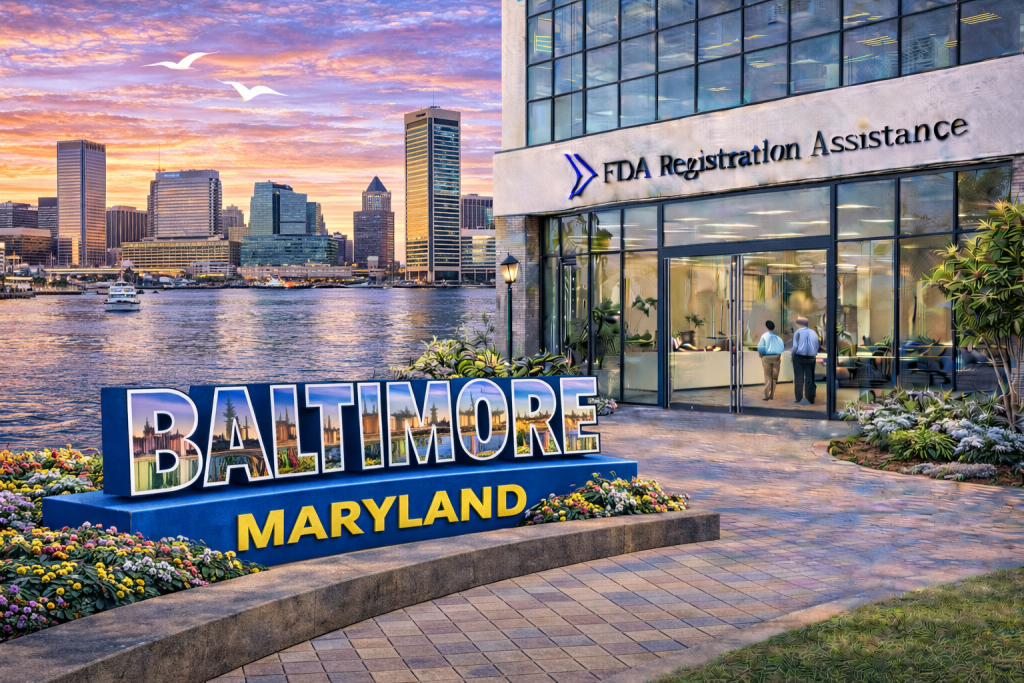
The Port of Baltimore sits closer to the Midwest than any other East Coast port and ranks first in the country for autos and for imported sugar. On its Inner Harbor, the landmark Domino Sugar refinery still turns imported raw cane into the sugar that ships to kitchens nationwide — and the city's spice and seasoning heritage runs just as deep. For sugar refiners, spice blenders, and importers, that means food-facility registration, FSVP, and labeling are everyday work.
Maryland is also a life-sciences powerhouse — anchored by Johns Hopkins and a dense biotech corridor, and home to the FDA's own headquarters. Device, diagnostic, drug, and biologic makers here carry establishment registration, listing, and premarket obligations like anyone else; being near the agency doesn't change the rules, but the regulatory ecosystem is unusually deep. We're a U.S.-based firm serving Baltimore and Maryland across every category.
A Cross-Category Checklist
FDA Registration for Every Product Type
Whatever you import, refine, blend, or make in Baltimore, we handle the full FDA pathway by category: FDA food facility registration, FDA drug establishment registration, medical device registration, and MoCRA cosmetic registration. Tell us your category and role, and we'll map the exact steps.
FDA Compliance for Your Baltimore Business
Tell us your products and your role — sugar or spice processor, food or supplement maker, importer, device or drug company, or brand owner — and we'll confirm exactly which FDA registrations, listings, and programs apply, then handle the filings, FSVP and U.S. Agent work, import-hold prevention, and label review. Email info@fdaregistrationassistance.com or call +1 (928) 275-8333.
Frequently Asked Questions — FDA Consulting in Baltimore, Maryland
Do businesses in Baltimore need FDA registration?
Many do. If your Baltimore or Maryland business manufactures, processes, packs, holds, imports, or markets FDA-regulated food, drinks, drugs, cosmetics, or medical devices, registration is generally required. What you file depends on your role.
What makes Baltimore distinctive for FDA compliance?
Baltimore is a sugar-and-spice town with a major port. The harbor's sugar refining, the region's deep spice and seasoning heritage, and heavy imports of raw sugar and spices put food-facility registration and FSVP at the center of the FDA work here — alongside Maryland's strong life-sciences sector.
We import raw sugar or spices through the Port of Baltimore — what applies?
Those are imported foods, so the foreign supplier's facility registers, you appoint a U.S. Agent, run an FSVP plan verifying that supplier, and file Prior Notice. Baltimore brings in raw sugar and spices from around the world, and we set up the full chain.
Do sugar refiners and spice or seasoning companies register?
Yes. A facility that refines sugar, blends spices, or packs seasonings processes food, so it registers as an FDA food facility, follows FSMA preventive controls, and labels correctly. Baltimore's sugar-and-spice industry is squarely in scope.
Are imported spices a particular FDA concern?
Yes. Spices are among the more closely watched imported foods because of contamination risks like Salmonella and adulteration, and they draw FDA scrutiny at entry. A solid FSVP and supplier verification program is the surest way to keep spice imports moving.
Does a domestic Baltimore producer need a U.S. Agent?
No. A U.S. Agent is only required for foreign facilities. As a domestic Baltimore company you register your own facility, but you don't need a U.S. Agent — that requirement falls on the foreign suppliers you import from.
We import food or consumer goods through the Port of Baltimore — what do we need?
Imported food needs the foreign facility registered, a U.S. Agent appointed, an FSVP plan verifying the supplier, and Prior Notice before arrival. Baltimore handles everything from sugar to containerized goods, and we set up the whole import chain.
What happens if an imported shipment is held at the port?
FDA can detain, refuse, or place a shipment on an import alert, and storage and demurrage build while it sits. Getting registration, FSVP, and Prior Notice correct before arrival is the surest way to avoid a hold.
Do other Baltimore food and beverage makers register?
Yes. Facilities that make, process, or hold food or beverages register as FDA food facilities, follow FSMA preventive controls, and label correctly. Baltimore-area bakeries, snack, and specialty-food makers are within scope.
Do dietary supplement companies in Baltimore register?
Yes. Supplements are regulated as foods, so facilities register and follow cGMP under Part 111 with a Supplement Facts label. The area's supplement and natural-products makers fall under these rules.
Do medical device and biotech companies in Maryland register?
Yes. Device and diagnostic makers complete FDA establishment registration and device listing, maintain the QMSR, and obtain a 510(k) or PMA depending on class. Maryland's strong life-sciences corridor, anchored by Johns Hopkins, includes many such companies.
Do drug, vaccine, and biologic companies register?
Yes. Drug and biologic establishments register and list with the FDA, with NDC labeler codes and cGMP, separate from the approval and licensure pathways new products follow. Maryland's biopharma sector falls under these rules.
The FDA is headquartered in Maryland — does that change our obligations?
No. Being near the FDA's headquarters doesn't change what you file or when. Every facility still registers, lists, and complies on the same terms as anyone else. It does mean Maryland has an unusually dense regulatory and life-sciences ecosystem.
Do cosmetics and personal-care brands register?
Under MoCRA, cosmetic manufacturers register their facility, list products, name a Responsible Person, and substantiate safety. Baltimore-area beauty and personal-care brands are within scope, whether they make or import.
We're a contract manufacturer or co-packer — do we register?
Yes. A facility that manufactures or packs FDA-regulated products registers in its own right, whether it processes sugar, blends spices, or makes supplements or cosmetics. Co-packers and their brand-owner clients each have obligations, and we sort out who files what.
Is allergen labeling a concern for spice blends and seasonings?
Yes. Seasoning blends can contain allergens and additives that must be declared, and undeclared allergens are a leading cause of recalls. We review ingredient statements and labels so blends and mixes stay compliant.
Can FDA Registration Assistance act as our U.S. Agent or FSVP Agent?
Yes. We serve as the U.S. Agent for foreign facilities and the FSVP Agent for imported food, and we manage food, drug, device, and cosmetic registrations and listings for Baltimore businesses.
Are you local to Baltimore?
We are a U.S.-based firm serving Baltimore and Maryland, alongside clients across the country and 135+ countries, with the same structured process whether you're local or elsewhere.
Does FDA registration cover labeling review?
Registration and labeling are separate but related. We review Nutrition or Supplement Facts panels, ingredient and allergen statements, and claims, because mislabeling — especially undeclared allergens — is a leading cause of recalls.
Is a DUNS Number required?
Yes, for food facility registration the DUNS Number is the required Unique Facility Identifier. We help you or your foreign supplier obtain one if it isn't already in place.
Does registration need to be renewed?
Yes. Food and cosmetic facility registrations renew biennially, while drug and device establishment registrations renew annually. We track and manage the renewals so nothing lapses.
Does FDA registration mean FDA approval?
No. Registration and listing are mandatory regulatory steps; they are not FDA approval or endorsement. A device may still need a 510(k), and a drug its own approval, to be marketed.
How long does FDA registration take?
Many registrations and listings are completed within a few business days once your information and any identifiers, like a DUNS Number, are ready. FSVP setup, premarket submissions, and labeling reviews take additional time.
We sell our products online — do FDA rules still apply?
Yes. Online and marketplace sales don't change FDA requirements; facility registration, listing, and compliant labeling still apply, and marketplaces often request proof of registration before listing.
How do I get started?
Send us your products and your role — sugar or spice processor, food or supplement maker, importer, device or drug company, or brand owner. Contact our team and we'll confirm which FDA requirements apply to your Baltimore business and handle the registrations and filings. Email info@fdaregistrationassistance.com or call +1 (928) 275-8333.