Medical Device Quality Management System Regulation (QMSR) – Medical Device Compliance | FDA Registration Assistance
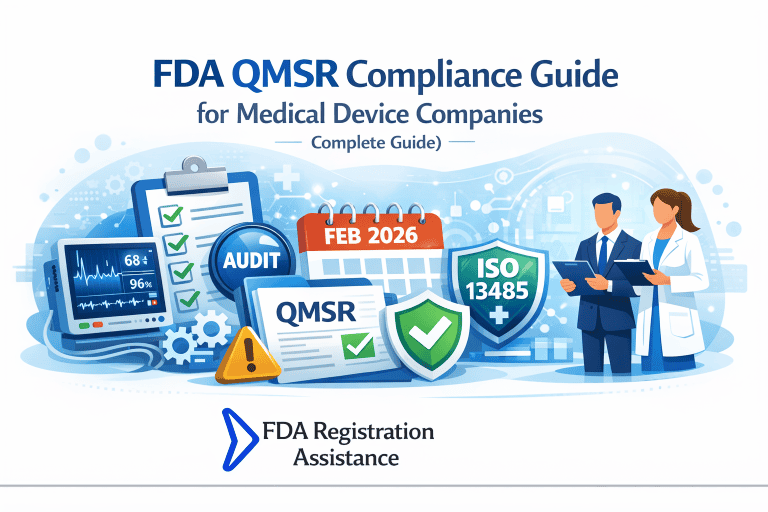
Effective February 2, 2026 • FDA’s New Quality System Rule Aligned with ISO 13485:2016
The U.S. Food and Drug Administration (FDA) has amended the current Good Manufacturing Practice (CGMP)requirements for medical devices under 21 CFR Part 820, creating the Quality Management System Regulation (QMSR). This updated regulatory framework replaces the legacy Quality System Regulation (QSR) and harmonizes U.S. device quality system requirements with internationally recognized standards to improve consistency, safety, and global market compatibility.
What Is the QMSR?
The Quality Management System Regulation (QMSR) is the FDA’s revised set of quality system requirements that device manufacturers must follow to ensure consistent product quality and compliance. It becomes effective February 2, 2026 and formally incorporates by reference the international standard ISO 13485:2016 — Medical Devices – Quality Management Systems — along with clause 3 of ISO 9000:2015 (quality management fundamentals and vocabulary).
The QMSR:
Modernizes the U.S. quality system framework by aligning it with global harmonized standards.
Ensures quality management systems emphasize risk-based approaches across the entire device lifecycle.
Maintains critical FDA authority where necessary, ensuring public health protections under U.S. law.
Why the QMSR Matters to Medical Device Manufacturers
The shift from the legacy Quality System Regulation (QSR) to the QMSR represents one of the most significant regulatory changes in decades for medical device quality systems in the United States.
Key benefits and objectives include:
Global Harmonization: Aligns U.S. regulations with widely accepted international requirements, helping manufacturers manage both domestic and global compliance.
Risk-Based Management: Embeds risk management throughout quality processes to enhance product safety and performance.
Consistent Inspection Practices: FDA inspection processes will also evolve to reflect the new QMSR framework.
Core QMSR Requirements
Under the QMSR, device manufacturers must implement a comprehensive quality management system that adheres to ISO 13485:2016 principles, including:
Documentation and Record Controls – Establish and maintain document and record systems in line with ISO standards and FDA requirements.
Risk-Based Process Controls – Embed risk assessment throughout design, development, production, and postmarket activities.
Supplier & Audit Controls – Ensure suppliers and internal audits meet regulatory expectations and are routinely managed.
Inspection Readiness – Prepare for FDA inspections under the updated QMSR compliance program replacing the old QSIT methodology.
ISO 13485:2016 remains the backbone of the QMSR requirements, although meeting ISO alone does not guarantee full FDA compliance; manufacturers must ensure FDA-specific statutory obligations (e.g., unique device identification, device reporting) are integrated into their QMS.
Who Must Comply with the QMSR?
The QMSR applies broadly to manufacturers of finished medical devices intended for commercial distribution in the U.S. A “finished device” includes devices or accessories that are ready for use, whether labeled, packaged, sterilized, or not.
Certain components considered accessories to finished devices may also fall under the QMSR. Manufacturers of these products must assess applicability and ensure systems are compliant.
Preparing for QMSR Compliance
With the QMSR compliance deadline now in effect, device manufacturers should take proactive steps:
Perform a gap analysis comparing current quality systems against ISO 13485 and QMSR requirements.
Develop an implementation plan to update or revise QMS processes, documentation, and training.
Ensure inspection readiness by aligning internal audit activities with the updated FDA inspection framework.
Integrate risk management throughout the device lifecycle as required by both ISO 13485 and the QMSR.
Manufacturers who already operate under ISO 13485:2016 will have a strong foundation but should still confirm all FDA-specific requirements are fully integrated.

Why Work With FDA Registration Assistance
At FDA Registration Assistance, we specialize in helping medical device companies navigate complex regulatory changes like the QMSR — ensuring compliance, reducing risk, and supporting timely market access. Our services include:
Gap assessments and QMS readiness evaluations
Compliance planning and ISO 13485 implementation support
FDA inspection preparation and support
Regulatory submissions and quality documentation guidance
Whether you’re transitioning from the legacy QSR framework or strengthening your existing QMS, our team offers the regulatory insight and practical support you need to stay compliant under QMSR.
Frequently Asked Questions About FDA QMSR Compliance
What is the FDA Quality Management System Regulation (QMSR)?
The QMSR is the FDA’s updated medical device quality system regulation that replaces the legacy Quality System Regulation (QSR) in 21 CFR Part 820. It aligns U.S. requirements with ISO 13485:2016 while maintaining FDA-specific regulatory authority.
When does the QMSR go into effect?
The FDA will begin enforcing QMSR on February 2, 2026. After this date, manufacturers must comply with the new framework.
Why did the FDA change the Quality System Regulation?
The FDA updated the regulation to harmonize U.S. medical device quality requirements with global standards, reduce regulatory burden for international manufacturers, and improve product safety using risk-based quality management principles.
Does QMSR fully replace ISO 13485?
No. QMSR incorporates ISO 13485:2016 by reference as the foundation of the regulation but still requires compliance with certain FDA-specific statutory obligations.
If my company is ISO 13485 certified, am I automatically compliant with QMSR?
Not automatically. While ISO 13485 certification puts you in a strong position, you must still ensure FDA-specific requirements such as complaint handling, device reporting, and regulatory records are fully integrated.
Who must comply with QMSR?
QMSR applies to manufacturers of finished medical devices intended for commercial distribution in the United States, including certain device accessories.
Does QMSR apply to foreign manufacturers?
Yes. Any manufacturer—U.S. or international—selling medical devices in the U.S. market must comply with QMSR requirements.
How will FDA inspections change under QMSR?
FDA will replace the old QSIT inspection model with a new inspection approach aligned with QMSR and ISO 13485 structure starting February 2, 2026.
Will FDA review internal audits and management review records?
Yes. Under QMSR, FDA has authority to inspect internal quality audits, supplier audits, and management review documentation.
What are the main components of a QMSR-compliant quality system?
Key elements include:
• Document and record controls
• Risk management throughout product lifecycle
• Design and development controls
• Supplier qualification and monitoring
• Corrective and preventive actions (CAPA)
• Complaint handling and post-market surveillance
What is the first step to preparing for QMSR?
The best starting point is a QMSR gap analysis comparing your current quality system to ISO 13485:2016 and FDA-specific obligations.
Do small medical device companies need QMSR?
Yes. QMSR applies regardless of company size. However, systems can be scaled appropriately based on business complexity and risk.
Will legacy QSR procedures still be acceptable?
Some procedures may still align, but most companies will need updates to match ISO 13485 structure and QMSR inspection expectations.
What happens if we are not compliant by February 2026?
Non-compliance can result in:
• FDA Form 483 observations
• Warning letters
• Import detentions
• Product seizures
• Market access restrictions
Does QMSR affect FDA medical device registration and listing?
No, registration and listing remain separate regulatory requirements, but they must be supported by a compliant quality system.
How long does QMSR transition usually take?
For most companies:
• 3–6 months for simple operations
• 6–12 months for complex manufacturers
Early preparation is strongly recommended.
Can FDA Registration Assistance help implement QMSR?
Yes. We support:
• QMSR gap assessments
• ISO 13485 alignment
• Documentation updates
• Compliance roadmaps
• Inspection readiness
• Ongoing regulatory support
Do we need new SOPs for QMSR?
Most companies will need revised or new SOPs aligned with ISO 13485 terminology, risk-based controls, and FDA requirements.
Is training required under QMSR?
Yes. Staff must be trained on updated quality procedures and QMSR requirements, with documented competency records.
How do we get started with QMSR compliance?
Contact FDA Registration Assistance at +1-928-275-8333 for a readiness review and compliance plan tailored to your device operations.