OTC Drug Fees Update: OMUFA Changes Explained
The regulatory landscape for over-the-counter drug products continues to evolve, and one of the most important developments affecting manufacturers and distributors is the update to OMUFA fees for 2026. These changes directly impact cost structures, compliance obligations, and how companies plan their U.S. market strategy.
The Over-the-Counter Monograph Drug User Fee Program, regulated by the U.S. Food and Drug Administration, plays a central role in how OTC drugs are reviewed, maintained, and updated. With the latest updates under OMUFA II, companies must understand exactly what has changed and how it affects their operations.
What is OMUFA and Why It Matters
OMUFA was created to modernize the regulation of OTC drugs, allowing the FDA to collect user fees from industry participants and reinvest those funds into faster review timelines, improved safety oversight, and more efficient regulatory processes.
Unlike traditional drug approvals, OTC monograph drugs follow a different pathway, and OMUFA ensures that updates to monographs, safety requirements, and labeling changes can happen more quickly.
This program applies to companies manufacturing or processing OTC drugs under the monograph system, not those operating under approved drug applications.
Key OMUFA Changes for 2026
The most significant update comes from the reauthorization of OMUFA through 2030, commonly referred to as OMUFA II. This ensures continued funding and operational stability for FDA oversight of OTC drugs.
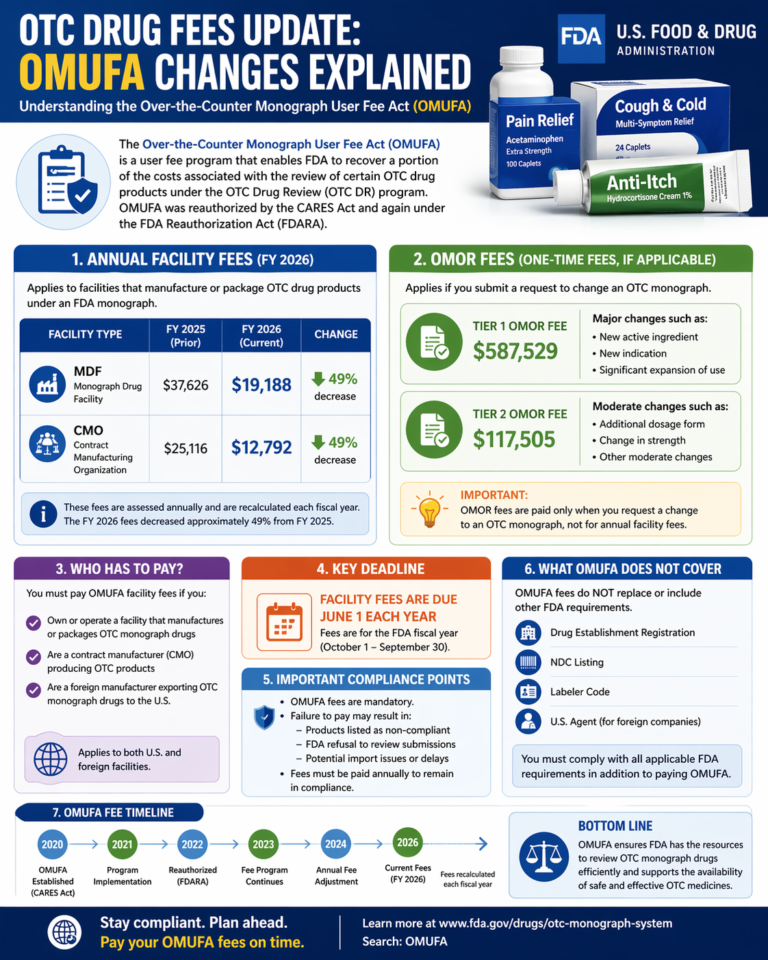
One of the most notable changes in 2026 is the reduction in facility fees. The standard OTC monograph drug facility fee dropped to $19,188, while contract manufacturing organizations are now subject to a reduced fee of $12,792.
This represents a substantial decrease of approximately 49 percent compared to the previous year, primarily due to adjustments in FDA operating reserves and recalculated program funding needs.
In addition to facility fees, OMOR fees, which apply when requesting changes to an OTC monograph, have increased slightly. Tier 1 OMOR fees are now $587,529, while Tier 2 fees are $117,505 for 2026.
Understanding OMUFA Fee Types
OMUFA consists of two primary fee categories that companies must be aware of when planning compliance.
Facility fees are annual fees paid by companies that manufacture or process OTC monograph drugs. These apply regardless of whether the facility is located inside or outside the United States.
OMOR fees apply when a company submits a request to modify an OTC monograph, such as introducing a new ingredient, changing labeling, or adjusting dosage requirements.
Both fee types are mandatory and are enforced strictly by the FDA.
Who Must Pay OMUFA Fees
Any company that owns or operates a facility manufacturing OTC monograph drugs is subject to OMUFA facility fees. This includes both domestic and foreign manufacturers.
Contract manufacturers are also required to pay, although at a reduced rate compared to standard facilities.
Importantly, these fees apply regardless of company size. There are no small business exemptions, which is a critical factor for startups and growing brands entering the OTC market.
When OMUFA Fees Are Due
For 2026, facility fees are due by June 1, 2026. Missing this deadline can result in serious regulatory consequences, including listing issues and potential disruption to your ability to market products in the United States.
Looking ahead, OMUFA II introduces a structured payment system for future years, including installment-based payments starting in 2027, which will change how companies manage cash flow and compliance timelines.
Why These Changes Matter for OTC Companies
The reduction in facility fees may appear beneficial at first glance, but it does not reduce the complexity of compliance. In fact, with OMUFA II, the FDA is placing greater emphasis on performance goals, review timelines, and enforcement consistency.
Companies must now be more proactive than ever in maintaining accurate registrations, ensuring proper listings, and aligning product formulations with monograph requirements.
Failure to comply can lead to product delisting, import refusals, or regulatory enforcement actions.
Common Compliance Risks Under OMUFA
Many companies misunderstand how OMUFA applies to their operations. Some believe that paying fees is optional or tied only to product changes, which is incorrect.
Others fail to properly register facilities or update their listings, creating discrepancies that can trigger FDA action. Inconsistent labeling, unsupported claims, and lack of documentation are also common issues.
Even companies already paying other FDA user fees, such as those under different regulatory programs, must still comply with OMUFA independently.
How to Stay Compliant with OMUFA in 2026
Staying compliant requires more than just paying fees. It involves ensuring your facility registration is accurate, your product listings are up to date, and your regulatory strategy aligns with FDA expectations.
It also requires understanding when OMOR submissions are necessary and how those submissions impact both cost and approval timelines.
Companies that treat OMUFA as a simple administrative requirement often face delays, while those who approach it strategically are able to move faster and avoid costly disruptions.
Final Thoughts on OMUFA 2026 Updates
OMUFA continues to reshape the OTC drug industry by introducing a more structured, fee-driven regulatory system. While the 2026 fee reductions provide some financial relief, they do not reduce the importance of full compliance.
Companies entering or operating in the OTC market must treat OMUFA as a core part of their regulatory strategy, not an afterthought.
Get Help Navigating OMUFA Compliance
Understanding OMUFA is one thing, but implementing it correctly across your facility, product listings, and regulatory strategy is where most companies run into issues.
If you are manufacturing, importing, or planning to launch OTC drug products in the United States, working with an experienced compliance partner like FDA Registration Assistance ensures everything is handled properly from the beginning.
From facility registration and U.S. Agent services to ongoing compliance support and OMUFA guidance, having the right team in place can prevent costly mistakes and delays.
For assistance with OTC drug registration and OMUFA compliance, you can reach out directly at info@fdaregistrationassistance.com or call +1-928-275-8333 to get started.