
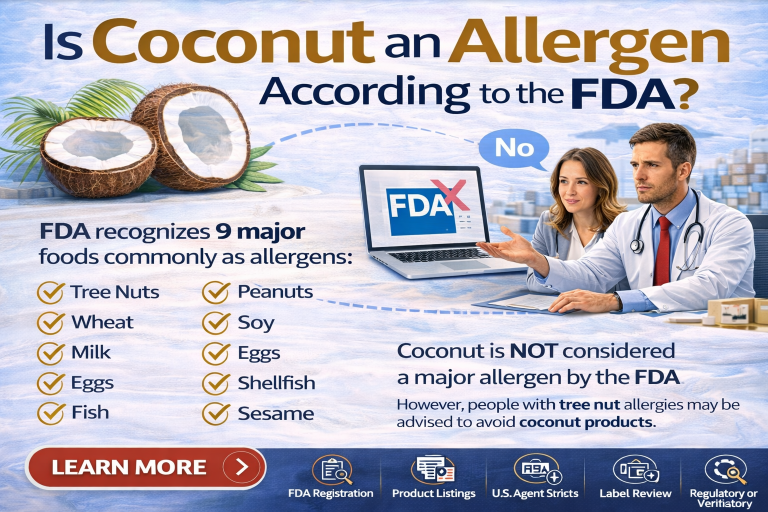
Is Coconut an Allergen According to the FDA?
Coconut is botanically a fruit (a drupe), coconut allergy is rare, and it is largely unrelated to true tree-nut allergy. This guide explains exactly what changed in 2025, what your labels should say now, which tree nuts are still major allergens, and how to handle the transition.
The January 2025 Guidance That Reclassified Coconut
In January 2025 the FDA finalized Edition 5 of its guidance, “Questions and Answers Regarding Food Allergens, Including the Food Allergen Labeling Requirements of the FD&C Act.” It made the most significant change to the tree-nut list in years: the list of tree nuts treated as major allergens was cut from 23 types to about 12, and coconut was removed.
What Your Label Should Say About Coconut Now
Do
List every coconut ingredient by its common name in the ingredient statement — coconut oil, coconut milk, coconut cream, coconut flour, coconut sugar, coconut water, shredded coconut. This is still required under 21 CFR 101.4.
Don't
Don't add coconut to a “Contains” allergen statement, don't label it “Contains: Tree Nuts (coconut),” and don't treat coconut alone as triggering a “Contains: Tree Nuts” line. It is no longer a major allergen.
Which Tree Nuts Are Still Major Allergens
The FDA kept the tree nuts that carry a real allergen risk and removed several botanical “nuts” that don't. The specific nut must always be named on the label.
| Still major allergens — must declare | Removed — ingredient list only |
|---|---|
| Almond | Coconut |
| Walnut | Beech nut |
| Pecan | Butternut |
| Cashew | Chestnut |
| Pistachio | Chinquapin |
| Hazelnut (filbert) | Ginkgo nut |
| Brazil nut | Hickory nut |
| Macadamia | Lichee nut |
| Pine nut | Pili nut, shea nut, cola/kola nut |
The left column lists about 12 tree nuts that remain major allergens; the right column shows examples removed in 2025. Removed items are still declared by common name in the ingredient list but not in a “Contains” statement.
The Nine Major Allergens — and the Other 2025 Clarifications
The FDA recognizes nine major food allergens, and coconut is not among them: milk, eggs, fish, crustacean shellfish, tree nuts, peanuts, wheat, soybeans, and sesame (sesame added January 1, 2023). The same 2025 guidance also made two related clarifications worth knowing:
Milk & egg sources expanded
Milk- and egg-derived ingredients must identify the animal source — for example “whey (goat milk)” or egg from specific fowl.
Molluscan shellfish aren't “shellfish”
Only crustacean shellfish are major allergens; clams, oysters, mussels, and scallops are not — see FDA registration for shellfish.
Do You Have to Relabel Right Away?
No. The FDA did not attach a firm compliance date to removing a “Contains: tree nuts (coconut)” statement. You can update the label at your next printing, or use stickers to correct existing stock in the meantime. The practical priorities:
The official source is the FDA's food allergen guidance (Edition 5, January 2025); the ingredient-list requirement is at 21 CFR 101.4 on eCFR, and FDA's overview is on the FDA food allergies page.
Make Sure Your Allergen Labels Are Current
Allergen labeling is one of the most common reasons products are refused at the U.S. border. We review your ingredient and allergen statements against the current FDA guidance — coconut, the updated tree-nut list, and all nine major allergens — and handle registration, U.S. Agent, and import compliance. Trusted by 1,000+ companies across 135+ countries, with 15+ years of FDA regulatory experience. Email info@fdaregistrationassistance.com or call +1 (928) 275-8333.
Frequently Asked Questions — Coconut & FDA Allergen Labeling
Is coconut an allergen according to the FDA?
As of the FDA's January 2025 guidance (Edition 5 of its food allergen Q&A), coconut is NOT a major food allergen. The FDA removed coconut from its list of tree nuts that must be declared under FALCPA. Coconut must still appear in the ingredient list by name, but it is no longer required — and should not be placed — in a “Contains” allergen statement.
Didn't the FDA used to classify coconut as a tree nut?
Yes. For years the FDA included coconut in its broad tree-nut list for FALCPA labeling, so products were often labeled “Contains: Tree nuts (coconut).” That changed with the January 2025 guidance, which narrowed the tree-nut list and removed coconut.
Why did the FDA remove coconut from the tree-nut list?
The FDA reduced its tree-nut list from 23 to about 12 types, keeping the nuts that pose a meaningful allergen risk. Coconut is botanically a drupe (a fruit), coconut allergy is rare, and it is largely unrelated to true tree-nut allergy — so it was removed along with several other items.
Do I still have to list coconut in the ingredient statement?
Yes. Even though coconut is no longer a major allergen, any coconut-derived ingredient must still be declared by its common or usual name in the ingredient list under 21 CFR 101.4 — for example, “coconut oil,” “coconut milk,” or “shredded coconut.”
Can I put coconut in a “Contains” statement?
No. Because coconut is no longer a major food allergen, the FDA's guidance says it should not be included in a “Contains” statement. Coconut belongs in the ingredient list, not on the allergen “Contains” line.
What are the FDA's nine major food allergens now?
Milk, eggs, fish, crustacean shellfish, tree nuts, peanuts, wheat, soybeans, and sesame (sesame was added on January 1, 2023). Coconut falls outside all nine.
Which tree nuts ARE still major allergens?
The FDA's narrowed list keeps about 12 tree nuts, including almond, walnut, pecan, cashew, pistachio, hazelnut (filbert), Brazil nut, macadamia, and pine nut. These must still be declared as major allergens, and the specific nut must be named.
What other nuts did the FDA remove besides coconut?
Along with coconut, the FDA removed items such as beech nut, butternut, chestnut, chinquapin, ginkgo nut, hickory nut, lichee nut, pili nut, shea nut, and cola/kola nut from the major-allergen tree-nut list. Like coconut, they are still declared in the ingredient list but not in a “Contains” statement.
Do I have to relabel my products immediately?
No. The FDA did not set a firm compliance date for removing a “Contains: tree nuts (coconut)” statement. You can update at your next label printing, or use stickers to correct existing labels in the meantime.
Should I keep declaring coconut voluntarily?
You can. Some companies continue to disclose coconut in the ingredient list for transparency and to reassure the small number of coconut-allergic consumers. What you should not do is present it as an FDA major-allergen “Contains” statement, since coconut is no longer a major allergen.
Is coconut allergy actually common or dangerous?
Coconut allergy exists but is uncommon compared with peanut, milk, or true tree-nut allergies, and most people with a tree-nut allergy are not allergic to coconut. That low prevalence is part of why the FDA reclassified it.
Does this change apply to imported foods too?
Yes. The same FDA labeling rules apply to imported and domestic foods. Imported products should follow the current guidance: coconut in the ingredient list, not in the “Contains” statement — see importing human foods into the U.S..
What about coconut in cosmetics or supplements?
This change concerns FDA food allergen labeling under FALCPA. Cosmetics follow separate rules under MoCRA, and dietary supplements follow food labeling plus a Supplement Facts panel. As a food or supplement ingredient, coconut is still declared by its common name.
How must other tree nuts be declared?
The specific tree nut must be named — for example “almonds,” “walnuts,” or “cashews” — in the ingredient list or in the “Contains” statement. A generic “tree nuts” alone is not sufficient for the nuts that remain major allergens.
Did the same 2025 guidance change anything else?
Yes. The Edition 5 guidance also expanded milk and egg source identification (for example, “whey (goat milk)”) and clarified that molluscan shellfish — clams, oysters, mussels, and scallops — are not “shellfish” major allergens; only crustacean shellfish are. See FDA registration for shellfish products.
If coconut isn't a major allergen, can I claim my product is “allergen-free”?
Be careful. “Allergen-free” and similar claims must be truthful and not misleading and must account for all nine major allergens actually present. Removing coconut from the allergen statement does not make a product allergen-free if it still contains, for example, milk or wheat.
What happens if my allergen labeling is wrong?
Incorrect allergen labeling — especially an undeclared major allergen — is one of the most common causes of FDA import refusals, recalls, and warning letters. Over-declaring, such as keeping a now-inappropriate coconut “Contains” statement, can also create labeling problems.
Do importers need to verify allergen labeling?
Yes. Importers are responsible for ensuring products meet current FDA labeling, including the correct treatment of the nine major allergens and the updated tree-nut list — see FSVP for importers.
Where is the official FDA position written?
In the FDA's “Questions and Answers Regarding Food Allergens, Including the Food Allergen Labeling Requirements of the FD&C Act (Edition 5),” finalized in January 2025, with the underlying ingredient-list requirement at 21 CFR 101.4.
Does coconut flour or coconut sugar need to be in the ingredient list?
Yes. Coconut flour, coconut sugar, coconut cream, coconut water, and similar ingredients must be declared by their common name in the ingredient statement, even though none of them triggers a major-allergen “Contains” statement.
My product is sold internationally — does coconut count as an allergen elsewhere?
Possibly. Some countries and standards treat coconut differently from the FDA. If you sell in multiple markets, your label must satisfy each market's rules; the FDA's removal of coconut applies to U.S. labeling specifically.
Can FDA Registration Assistance review my labels for this?
Yes. We review ingredient and allergen statements against the current FDA guidance, including the updated tree-nut list, so coconut and the nine major allergens are handled correctly — see FDA food label regulations.
Is “Contains: Tree Nuts” needed if coconut is my only “nut”?
No. If coconut is the only tree-nut-type ingredient and no true major-allergen tree nut is present, a “Contains: Tree Nuts” statement is not appropriate. Coconut alone no longer triggers it.
Does this affect “may contain” advisory statements?
Advisory “may contain” statements are voluntary and address cross-contact with major allergens. Since coconut is no longer a major allergen, a coconut cross-contact advisory is generally not warranted as an FDA allergen advisory, though each company makes its own risk decision.
How do I make sure my food labels are current?
Contact FDA Registration Assistance with your product labels and ingredient lists. Reach our team and we confirm allergen declarations against the latest FDA guidance and handle registration, U.S. Agent, and import compliance. Email info@fdaregistrationassistance.com or call +1 (928) 275-8333.