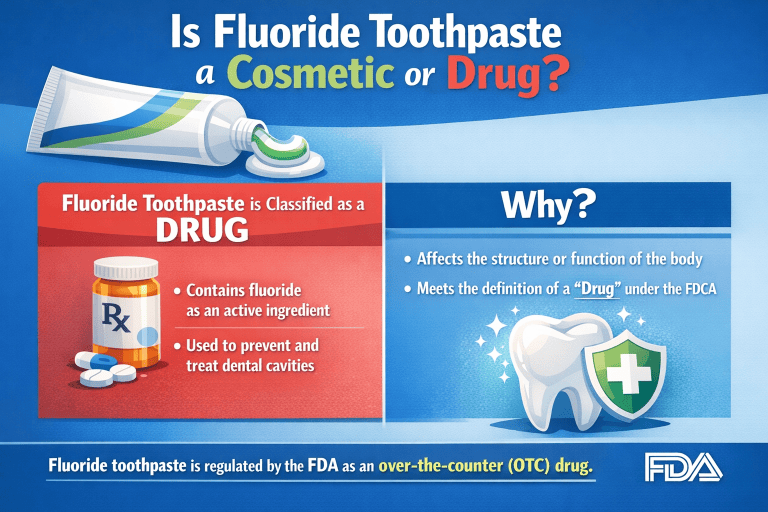
Is Fluoride Toothpaste a Cosmetic or Drug?
Why fluoride makes toothpaste a drug, when a toothpaste is a cosmetic, and why most are both — plus the anticaries monograph specifics.
Key Takeaways
- Fluoride toothpaste = OTC drug — anticaries monograph, 21 CFR Part 355.
- Three fluoride actives — sodium fluoride, sodium monofluorophosphate, stannous fluoride (~1,000 ppm).
- No fluoride + no drug claims = cosmetic — cleaning/surface whitening/breath (MoCRA).
- Most commercial toothpastes are both — a drug/cosmetic combination.
- Sensitivity & anti-gingivitis are also drugs — whitening/breath are cosmetic.
- Drug Facts label required — and registration ≠ approval.
Toothpaste: Drug, Cosmetic, or Both
| If the toothpaste… | It's… | Basis |
|---|---|---|
| Contains fluoride / prevents cavities | An OTC drug | Anticaries monograph (21 CFR 355) |
| Treats sensitivity / gingivitis / plaque | An OTC drug | Applicable drug monograph |
| Only cleans, freshens breath, whitens surface (no fluoride/claims) | A cosmetic | MoCRA |
| Fluoride + whitening (most commercial pastes) | Both — drug + cosmetic | Combination product |
The Anticaries Rules (21 CFR Part 355)
Fluoride toothpaste is marketed OTC by complying with the Anticaries Drug Products monograph (21 CFR Part 355, OTC monograph M021):
- Three permitted fluoride actives — sodium fluoride, sodium monofluorophosphate, and stannous fluoride, at the monograph concentrations
- ~1,000 ppm fluoride ion — dentifrices generally 850–1,150 ppm (a monofluorophosphate form up to ~1,500 ppm theoretical); above ~1,100 ppm typically needs an NDA, not the monograph
- Package limit: ≤276 mg total fluorine per package — because fluoride is toxic in quantity
- Drug Facts label (21 CFR 201.66) — active, use, warnings (incl. "Keep out of reach of children"), and age directions; stannous fluoride adds a surface-staining statement
Which Toothpaste Functions Are Drug vs Cosmetic
| Cosmetic functions | Drug functions |
|---|---|
| Cleans teeth | Prevents cavities (fluoride/anticaries) |
| Freshens breath | Relieves tooth sensitivity |
| Whitens by removing surface stains | Reduces/prevents gingivitis |
| Improves appearance | Antiplaque / tartar control (with a drug claim) |
Registering Each
Fluoride (or sensitivity / anti-gingivitis) toothpaste — the OTC drug path:
- Drug establishment registration + NDC + SPL drug listing — annual renewal; U.S. Agent if foreign
- Drug Facts label + monograph-compliant actives/claims (21 CFR 355) + cGMP + OMUFA
Non-fluoride cosmetic toothpaste — the MoCRA path:
- Facility registration + product listing + Responsible Person — biennial renewal; U.S. Agent if foreign
- Safety substantiation, adverse-event reporting, labeling — cosmetic claims only
Common Toothpaste Mistakes
- Assuming all toothpaste is a cosmetic — fluoride makes it a drug
- Missing that whitening + fluoride is a combination product
- No Drug Facts panel (or used incorrectly)
- Off-monograph fluoride concentration or package size
- Treating sensitivity / anti-gingivitis pastes as cosmetics
- Missing the U.S. Agent (foreign); "FDA approved" claims
Get Your Toothpaste Compliant
FDA Registration Assistance classifies the product first — drug (fluoride/anticaries, sensitivity, anti-gingivitis), cosmetic (non-fluoride cleaning/whitening/breath), or both — then handles the right registration: drug establishment registration, NDC/SPL listing, Drug Facts and monograph compliance for the drug aspects, and MoCRA facility registration and listing for the cosmetic aspects — with a U.S. Agent for foreign facilities.
Contact us at info@fdaregistrationassistance.com or call +1 (928) 275-8333 for a quote. An independent compliance firm serving 1,000+ companies across 135+ countries, with 15+ years of experience.
Frequently Asked Questions — Fluoride Toothpaste
1. Is fluoride toothpaste a cosmetic or a drug?
A drug. Fluoride toothpaste is an over-the-counter drug, not a cosmetic, because preventing cavities (an anticaries effect) is a therapeutic claim that affects the structure/function of the body. It's regulated under FDA's Anticaries Drug Products monograph (21 CFR Part 355). Even though the same product also cleans and freshens (cosmetic functions), the fluoride and its cavity-prevention purpose put it on the drug pathway.
2. Which monograph and actives apply to fluoride toothpaste?
The Anticaries Drug Products monograph, 21 CFR Part 355 (OTC monograph M021). It permits three fluoride active ingredients in dentifrices: sodium fluoride, sodium monofluorophosphate, and stannous fluoride, at established concentrations that deliver roughly 1,000 ppm fluoride ion (dentifrices generally fall in the 850–1,150 ppm range). Using one of these actives at the monograph concentration, with monograph-compliant claims and labeling, is what lets a fluoride toothpaste be marketed OTC without a separate approval.
3. When is a toothpaste a cosmetic instead?
When it contains no fluoride (or other drug active) and makes only cosmetic claims - cleaning teeth, freshening breath, or improving appearance (including surface whitening). A non-fluoride "natural" toothpaste marketed just to clean and freshen is a cosmetic under MoCRA. The moment it adds fluoride, or claims to prevent cavities, treat sensitivity, or fight gingivitis, it becomes a drug.
4. Can a toothpaste be both a cosmetic and a drug?
Yes - and most commercial toothpastes are. Toothpaste is one of FDA's classic drug/cosmetic combination products: the fluoride (anticaries), sensitivity, or anti-gingivitis functions make it a drug, while the whitening (surface), breath-freshening, and cleaning functions are cosmetic. A combination toothpaste must meet the drug requirements for the drug part (monograph, Drug Facts, drug registration) and the cosmetic requirements for the cosmetic aspects. "Both" means more obligations, not fewer.
5. Is whitening toothpaste a drug?
Surface whitening - removing surface stains to improve appearance - is a cosmetic claim, so whitening by itself is cosmetic. But most whitening toothpastes also contain fluoride, which makes them drug/cosmetic combinations (drug for the fluoride, cosmetic for the whitening). Note that bleaching claims that go beyond surface stains, or peroxide-based whitening making therapeutic claims, can raise separate questions - but ordinary surface-stain whitening is a cosmetic function.
6. Are sensitivity and anti-gingivitis toothpastes drugs?
Yes. Treating tooth sensitivity (with actives like potassium nitrate or stannous fluoride) and reducing/preventing gingivitis are therapeutic effects, so those toothpastes are OTC drugs (each under the applicable monograph or requirements). So beyond fluoride/anticaries, sensitivity, anti-gingivitis, antiplaque, and tartar-control-with-a-drug-claim all push a toothpaste onto the drug side. Cosmetic toothpaste is limited to cleaning, surface whitening, and breath freshening.
7. What are the fluoride concentration and package limits?
Monograph fluoride dentifrices deliver about 1,000 ppm fluoride ion (generally 850–1,150 ppm; a sodium monofluorophosphate form can reach ~1,500 ppm theoretical fluorine). Concentrations above roughly 1,100 ppm typically require an approved application (NDA) rather than OTC monograph compliance. And because fluoride is toxic in quantity, the monograph limits dentifrice packages to no more than 276 mg total fluorine per package. These limits are part of being monograph-compliant.
8. What labeling does fluoride toothpaste need?
A Drug Facts panel (21 CFR 201.66): active ingredient (the fluoride compound), use (anticavity/cavity prevention), warnings, and directions - including a "Keep out of reach of children" warning and age-specific directions (children under 6 should be supervised, and typically told to consult a dentist/doctor). Stannous fluoride products also carry a surface-staining statement. A combination toothpaste's cosmetic aspects follow cosmetic labeling too, but the Drug Facts panel is required for the fluoride.
9. What registration does a fluoride toothpaste need?
The OTC drug pathway: drug establishment registration (21 CFR Part 207), an NDC number and SPL drug listing for each product, a Drug Facts label, monograph-compliant actives and claims (21 CFR Part 355), cGMP manufacturing, and OMUFA facility fees - plus a U.S. Agent if the facility is foreign. Drug establishment registration renews annually. This is different from (and heavier than) the cosmetic MoCRA path that applies to a non-fluoride cosmetic toothpaste.
10. What about a non-fluoride cosmetic toothpaste — what does it need?
A true cosmetic toothpaste (no fluoride, no drug claims) follows MoCRA: facility registration, product listing, a Responsible Person, safety substantiation, adverse-event reporting, and compliant labeling - with a U.S. Agent if foreign. Facility registration renews every two years. But be careful: if it later adds fluoride or a cavity/sensitivity/gingivitis claim, it moves to the drug pathway, so plan the classification before formulating and marketing.
11. Do foreign toothpaste brands need to register?
Yes. Any toothpaste marketed in the U.S. must comply regardless of where it's made, and foreign facilities need a U.S. Agent on either pathway. A foreign fluoride (or sensitivity/anti-gingivitis) toothpaste registers as a drug establishment with a U.S. Agent; a foreign non-fluoride cosmetic toothpaste registers under MoCRA with a U.S. Agent. Imported toothpaste is examined for correct classification, monograph compliance, and labeling, so sort those out before shipping.
12. Does "natural" or "fluoride-free" toothpaste still need to comply?
Yes. "Natural" and "fluoride-free" are marketing terms that don't remove compliance obligations - a fluoride-free cosmetic toothpaste still needs MoCRA registration, listing, safety substantiation, and labeling. And if a "natural" toothpaste makes a drug claim (cavity prevention, sensitivity, gingivitis), it's a drug regardless of the natural positioning. Being fluoride-free changes the pathway (cosmetic vs drug), not whether you have to comply.
13. Does registering my toothpaste mean it's FDA-approved?
No. FDA doesn't approve cosmetics, and OTC monograph drugs (like a compliant fluoride toothpaste) are "compliance, not approval" - they don't get an individual FDA approval, they comply with the monograph. So calling a toothpaste "FDA-approved" is misleading. The accurate statements are that your facility is registered, your products are listed, and (for the fluoride) the product complies with the anticaries monograph.
14. What are the most common toothpaste compliance mistakes?
Assuming all toothpaste is a cosmetic (fluoride makes it a drug); missing that a whitening-plus-fluoride toothpaste is a drug/cosmetic combination; using a Drug Facts panel incorrectly or not at all; exceeding monograph fluoride concentrations or package limits; treating sensitivity/anti-gingivitis products as cosmetics; missing the U.S. Agent (foreign); and "FDA approved" claims. Most trace back to not classifying by actives and claims first.
15. Is this the same as your "Is toothpaste an OTC drug?" guide?
They're closely related. This page answers the classification question - cosmetic, drug, or both - for fluoride toothpaste specifically. Our broader "Is toothpaste an OTC drug?" guide walks through the full compliance detail (the anticaries actives and concentrations, Drug Facts, NDC and drug listing, and the MoCRA side for cosmetic toothpaste). If you're moving from "which is it?" to "how do I register it?", that guide is the next step.
16. How does FDA Registration Assistance help toothpaste brands?
We classify the product first - drug (fluoride/anticaries, sensitivity, anti-gingivitis), cosmetic (non-fluoride, cleaning/whitening/breath), or both - then handle the right registration: drug establishment registration, NDC/SPL listing, Drug Facts, and monograph compliance for the drug aspects, and MoCRA facility registration and listing for the cosmetic aspects, with a U.S. Agent for foreign facilities. We're an independent compliance firm serving 1,000+ companies across 135+ countries with 15+ years of experience. Contact info@fdaregistrationassistance.com or +1 (928) 275-8333.